CHOWFood Storage
Can You Reuse Canning Lids? What Is Safe and What Is Not
Flat canning lids seal once. Here is what you can still do with a used lid, how to spot fakes, how long lids keep, and when reusable lids make sense.
 By Mike Dawson
10 min read
BLUFBottom line up front
No. Do not reuse a flat metal lid for canning. The first use dents the sealing compound, so it cannot make a second airtight seal. Bands and jars are reusable. A used flat can still cap a jar of dry food or a jar in the fridge.
- Flat lids are single-use for canning. Jars and screw bands can be used again.
- Unused flat lids keep about 5 years from the date they were made. Store them cool and dry.
- Fake Ball-branded lids turned up online during the 2020 shortage. Buy from real stores.
- Reusable rubber-ring lids work for many canners, but USDA and NCHFP do not recommend them. Practice in a normal summer.
- A jar that fails to seal is not lost. Refrigerate it, freeze it, or reprocess it within 24 hours.
Draw list What to get, and why
| Item | Why | Rough cost |
|---|---|---|
| Two-piece flat lids, a few boxes | One new lid for every jar you plan to can | A few dollars per box of 12 |
| Extra screw bands | Reusable unless badly rusted or bent | A few dollars per box |
| Spare canning jars | Glass lasts for generations if it is not chipped | About $10-15 per case of 12 |
| Reusable rubber-ring lids (Tattler-style), a small set | Backup you can practice with before you need it | More than metal lids up front; check current prices |
| Plastic storage caps for jars | Cap for leftovers and dry goods, so you save flats for canning | A few dollars per set |
Rather watch it?
I cover this in a video: 9 Cheap Items at Tractor Supply That Veterans Hoard Before Anyone Else.
Plays from YouTube when you click it.
You can reuse jars and screw bands. You should not reuse the flat metal lid for canning. The sealing ring on that lid is built to work one time, and a lid that has been through a canner will not give you a dependable second seal.
That is the short answer to “can you reuse canning lids”. The longer one matters, because lids are the part that goes missing. In the summer of 2020 they were harder to find than toilet paper, and a lot of people found out how much of a canning plan hangs on a thin disc of metal.
This article covers what a used lid can still do, how long new lids keep, how to avoid the fakes, and where reusable lids fit. It also covers a quick way to check a seal.
Why a canning lid only seals once
A flat lid has a ring of sealing compound on the underside. In the canner, heat softens that compound. As the jar cools, the compound grips the glass rim and the vacuum pulls the lid down tight.
The National Center for Home Food Preservation (NCHFP) puts it plainly: lids should not be used a second time, because the first use leaves the sealing compound dented and it cannot form another airtight seal. North Dakota State University Extension gives the same warning and adds that a used lid may fail to seal, which can make food unsafe.
The danger is not that the jar looks bad. A lid that seems to seal but let air in can let spoilage grow in low-acid food, and you may not know until you open it.
What you can reuse
- Jars. Glass can last for generations if it has no chips or cracks. Check the rim with a fingertip every time.
- Screw bands. NCHFP says bands may be reused unless they are badly rusted. Skip any band with a bent top edge, because it can stop a lid from sealing.
- Used flat lids, but not for canning. A used flat is fine as a cap on a jar of dry beans, a jar of leftovers in the fridge, or a jar of screws in the shop. Nothing is asking it to hold a vacuum there. This is common practice, not a tested rule, so do not use it for food you plan to keep on a shelf.
Safety: Never put a used flat lid back into the canner. If a lid is dented, bent or bubbled, throw it out.
Can you reuse canning lids? The two-piece rule in short
| Part | Reuse for canning? | Notes |
|---|---|---|
| Glass jar | Yes | Discard if chipped or cracked |
| Screw band | Yes | Not if badly rusted or bent |
| Flat metal lid | No | Single-use for canning |
| Used flat lid | For dry goods or fridge only | Not a canning seal |
| Rubber-ring reusable lid | Yes, by the maker’s rules | Not recommended by USDA/NCHFP |
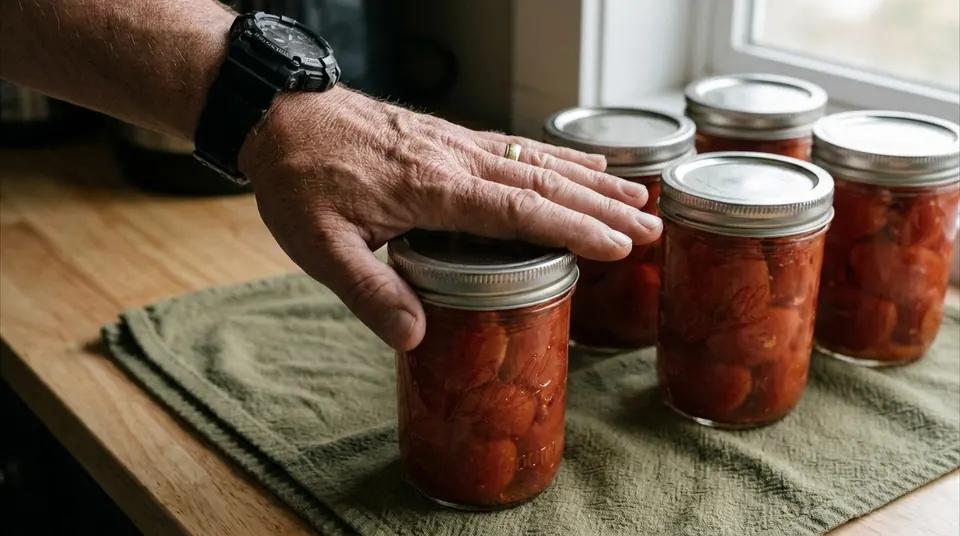
How long do canning lids last in storage
Lids do not last forever on the shelf. NCHFP guidance, as reported by NDSU, is that the gasket in unused lids works well for about five years from the date it was manufactured. Iowa State Extension says to avoid flats more than five years old.
Some older Ball material counted five years from purchase instead. Use the earlier date, the manufacture date, to stay on the safe side. If the box has no date, buy fresh lids.
Storage matters as much as age. NCHFP warns that moisture can corrode metal lids and cause leaks, and it recommends a cool, dry place. Keep the box inside the house, not in a hot attic or a damp garage. Heat and time harden the sealing ring.
Tip: Write the month you bought each box on the lid carton with a marker. Use the oldest box first, and keep new stock behind it.
Mice also chew cardboard. If your pantry or garage has a rodent problem, read my guide to rodent-proof food storage and keep the lid boxes in a sealed tin.
The 2020 canning lid shortage
In 2020 people were stuck at home, and many of them planted a garden at the same time. By late summer the gardens were producing, and everyone hunted for lids in the same few weeks.
Newell Brands, which owns Ball and Kerr, said that consumers staying home shifted demand and that the category saw unprecedented demand. Shelves went bare and stores set limits. A Utah State Extension notice said Newell expected only limited new shipments into the spring of 2021.
This is a small preview of how a real disruption plays out. The item with the lowest price and the smallest shelf space was the first to vanish. My list of what sells out first in an emergency shows the same pattern with bigger items.
Counterfeit canning lids
The shortage brought fakes. NPR reported that counterfeit sites were selling fake Ball lids. Ball’s own contact page says Ball and Newell have been alerted to counterfeit Ball-branded products sold online and tells shoppers to buy from legitimate sellers. Ball also says it stopped making home canning products in the 1990s, so Newell is the current maker.
Those reports are the official part. The warning signs below come from canners and retailers, not a government list, so treat them as clues and not proof.
- A price that is too good. Real lids were scarce and pricey. A cheap bulk deal is a red flag.
- Odd listing wording. Misspelled canning terms, or copied product names run together.
- Wrong packaging. Regular-mouth lids in wide-mouth boxes, or crushed cartons.
- Feel. Canners reported fake lids that were thicker and stiffer than the real thing, with a more tapered inside edge.
- Where it shipped from. A “Ball” box shipped from overseas by a seller you never heard of deserves a second look.
The fix is dull. Buy a real brand from a real store, such as a farm store, hardware store or grocery. This is one more reason a place like Tractor Supply beats a random online deal, and it is item 9 on my Tractor Supply prepping items list.
How to check that a lid sealed
Wait 12 to 24 hours after the jars come out of the canner. Then check each one.
- Take off the screw band.
- Look at the lid. It should curve slightly down in the center and not flex when you press it.
- Lift the jar a short way by the edges of the lid, with your other hand under the jar. A good seal holds.
- Wipe the jar, label it with the date, and store it without the band so a failed seal is easy to see.
Do not skip this step with a lid you are unsure about. NCHFP warns that a buckled lid, one that sealed but now has a crease, often fails later. If you find one on the shelf, discard the food.
If a jar does not seal
A failed seal is a setback, not a loss. Per NCHFP, you have three choices:
- Refrigerate the jar and eat the food within about a week.
- Freeze it, leaving 1 inch of headspace, for up to a year.
- Reprocess within 24 hours with a new lid and the same tested recipe.
NCHFP discourages reprocessing because of quality loss, so the first two options are the better ones when you can use them.
Reusable canning lids with rubber rings
Reusable lids, such as Tattler, have a plastic disc and a separate rubber ring. A metal band holds them on during processing. After the jar cools, the vacuum holds the lid, so the band comes off.
They can work. Healthy Canning reports that many users give up after early trouble but become fans by their second or third use. The plastic discs are meant to last indefinitely, and the rings eventually wear out.
To be fair, there are real limits:
- No official backing. USDA and NCHFP recommend the two-piece metal system, partly because research on reusable lids is lacking. NCHFP tested three types, and they sealed acceptably, but it still recommends metal two-piece lids for the highest confidence.
- A learning curve. Common causes of failure are a lid that was not hot, a dirty rim, wrong headspace, and forgetting to re-tighten the band after processing. Follow the insert that comes with your set, because instructions have changed over the years.
- A different seal test. There is no “ping” and no dip. You lift the jar by the lid.
- Cost up front. The set costs more than metal lids. The saving comes with reuse.
If you want a backup, buy a small set and use it in a normal summer, when a failed jar is a lesson and not a lost winter of food. Keep metal lids as your main supply. Do not make a first attempt with reusable lids in a real emergency.
How many lids do you need? A worked example
This is example math, so swap in your own numbers.
- Say your family puts up 100 jars in a season.
- You need 100 new flat lids, plus a few extra for jars that fail.
- At 12 lids per box, that is about 9 boxes.
- Add a spare season’s worth if you can store them within the five-year window.
Lids are cheap per jar. The risk is not the cost. It is having none when the harvest comes in.
What to do this weekend
- Count your jars and write down how many lids one season needs.
- Check the date or purchase month on every lid box you own. Use the oldest first.
- Move lid boxes to a cool, dry shelf inside the house.
- Buy two or three boxes from a real store, not a random online seller.
- Sort bands. Toss any that are rusted or bent.
- Buy a few plastic jar caps, so used flats and good lids are not wasted on leftovers.
- Learn the seal check before you need it. My guide to Tractor Supply prepping items covers other cheap farm-store buys.
Frequently asked questions
Can you reuse canning lids for canning?
No. NCHFP says lids should not be used a second time, because the first use dents the sealing compound and prevents another airtight seal. Use a new flat lid for every jar. You can reuse the jar and the screw band, as long as the jar is not chipped and the band is not rusted or bent.
Can you reuse canning lids for dry storage?
Yes, in practice. A used flat lid can cap a jar of dry beans, rice or leftovers in the fridge, where it does not need to hold a vacuum. Do not use a used lid for anything you plan to can or store on a shelf with a seal. That use is common practice rather than a tested rule.
How long do unused canning lids last?
About five years from the date they were made, according to NCHFP guidance reported by NDSU. Iowa State Extension says to avoid flats older than five years. Store them in a cool, dry place inside the house, because moisture can corrode them and heat can harden the sealing ring.
Are reusable canning lids safe?
Many canners use them with good results, but USDA and NCHFP do not recommend them because research is lacking. NCHFP’s own tests found three types sealed acceptably. If you try them, follow the maker’s instructions exactly and practice in a normal summer before you rely on them.
How can you tell if a canning lid is fake?
Look for a price that is too low, misspelled terms in the listing, mismatched or crushed packaging, and lids that feel thick and stiff. These are reported signs, not official proof. The best protection is to buy from a real store or a trusted seller and avoid unknown marketplace sellers.
What do you do if a canning jar did not seal?
Refrigerate it and eat the food within about a week, freeze it with 1 inch of headspace, or reprocess within 24 hours with a new lid. NCHFP discourages reprocessing because of quality loss. If a jar fails on the shelf later, throw the food out.
Sources
- NCHFP General Canning FAQs
- NDSU Extension: Don’t Be Tempted to Reuse Canning Lids (2020)
- Iowa State Extension AnswerLine: Are Two-Piece Lids Really Necessary?
- Healthy Canning: Tattler Reusable Lids for Home Canning
- NPR: The Latest COVID-19 Shortage Is Canning Lids (2020)
- Ball: general inquiries page (counterfeit notice)
- National Agricultural Library, USDA: Canning in World War II
General information, not medical or professional advice. In an emergency, call 911 and follow official instructions. Disclaimer.