SUPSupply Runs
What Sells Out First in an Emergency (and What to Buy Instead)
What sells out first in an emergency: bread, ice, D batteries, gas cans, formula and water. See 13 panic buys and the smarter, cheaper grab for each one.
 By Mike Dawson
13 min read
BLUFBottom line up front
Bread, milk, bagged ice, bottled water, D batteries, candles, small propane bottles, gas cans, kids’ fever medicine and baby formula go first. Skip the stampede. Buy shelf-stable milk, block ice, AA batteries, LED lights, a propane adapter hose, stabilized fuel and plain bleach on a calm day.
- The panic list is predictable: stores and shoppers repeat it every storm, and most of it needs power to be useful.
- A closed fridge keeps food safe about 4 hours; a full freezer about 48 hours (USDA).
- FEMA’s storage minimum is 1 gallon of water per person per day, so a case of bottles is under a day for a family.
- Candles and gas-can spouts are the two items where the panic buy can hurt you.
- Plain unscented bleach treats water for pennies per gallon, and it is rarely sold out.
Draw list What to get, and why
| Item | Why | Rough cost |
|---|---|---|
| Shelf-stable boxed milk, tortillas, peanut butter | No fridge, no stove, no countdown | A few dollars each |
| AA batteries (lithium and rechargeable) and LED lanterns | One battery size that fits the lantern, radio and headlamp | About $20-40 for a starter set |
| Manual can opener | The electric one is dead with the grid | About $10 |
| Gas cans plus fuel stabilizer | Stations can’t pump without power | About $15-30 per can, a few dollars of stabilizer |
| Adapter hose for a 20 lb propane tank | Runs a camp stove off the grill tank, far cheaper per pound | About $15-25 |
| Oral rehydration salts | Fixes the water loss that makes a stomach bug dangerous | A few dollars per box |
| Gallon jugs and collapsible water containers | More water per dollar than bottled cases | About $1-2 per jug, $10-20 collapsible |
| Plain unscented bleach | Treats drinking water at about 8 drops per gallon | A few dollars |
Rather watch it?
I cover this in a video: 13 Items That Disappear From Walmart in the First 5 Hours of Grid Collapse.
Plays from YouTube when you click it.
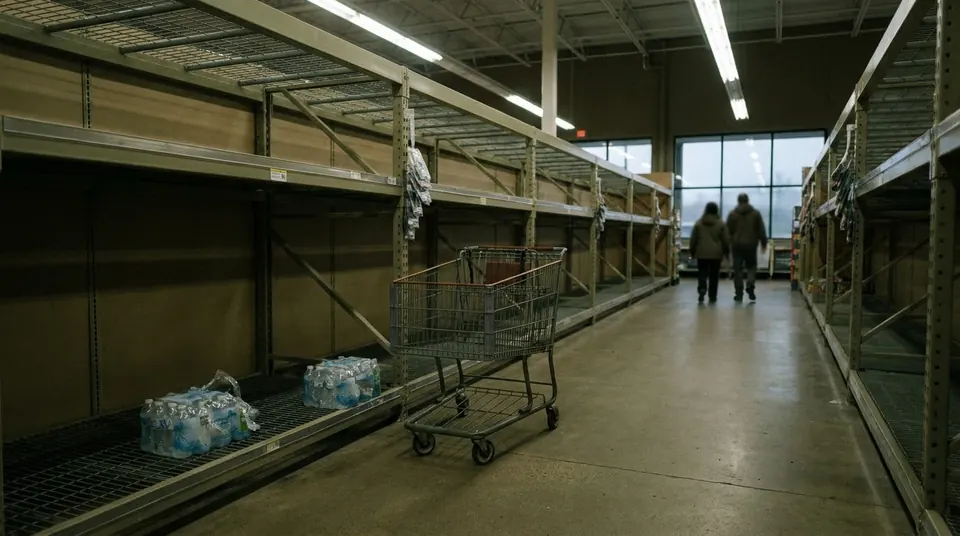
Every storm, the same shelves go empty in the same order. Bread, milk, bagged ice, bottled water, D batteries, gas cans. It is the same list every time, and the stores know it before you do.
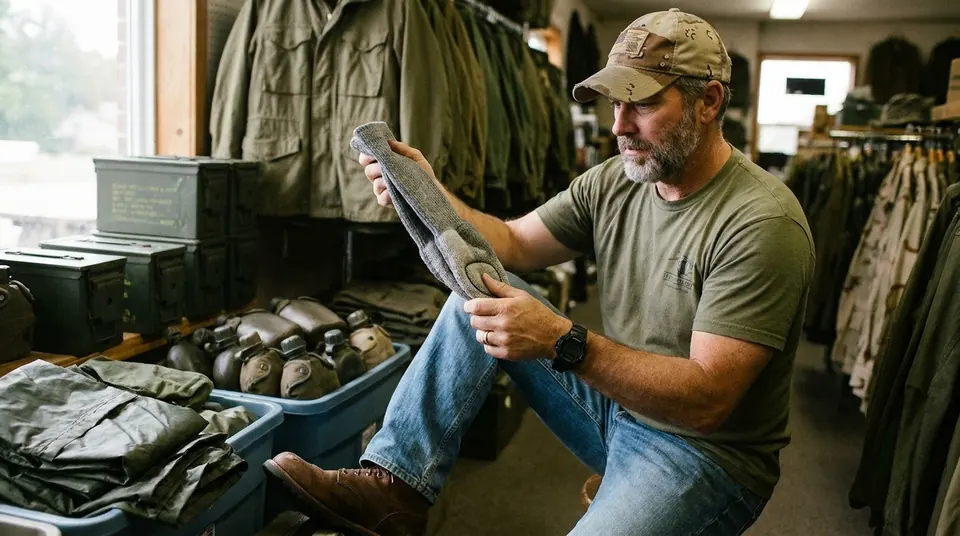
Here is what sells out first in an emergency, and what to grab instead. The smarter option is almost always cheaper, and it often sits a few feet from the empty shelf. I’m a veteran, and the army plans for the day the supply trucks stop. The habit that sticks is simple: do your buying on a quiet day, not in the crowd.
Do not treat this as a panic list. Treat it as a shopping list for a calm Saturday. Prices below are rough, and they change.
What sells out first in an emergency: the 13 items
I count them down from 13 to 1, the same order as the video. For each one you get the usual grab, why it fails when the grid is down, and the better move.
13. Bread and milk
The bread and milk run is a reflex. It also fails the first test of a blackout: milk needs a fridge, and the fridge needs the grid.
Ready.gov says a closed fridge stays cold for about 4 hours, and a full freezer for about 48 hours. After that, perishable food is a gamble. Soft bread goes stale fast in a warm, damp house.
Smarter grab: shelf-stable boxed milk (often on a regular shelf near the creamer), powdered milk, crackers and tortillas. Tortillas stay soft for weeks in the package, and you can wrap peanut butter in them.
12. Bagged ice
Cubes melt fast because every cube touches warm air on all sides. A solid block has far less surface for the heat to work on. That is basic physics, not a lab result.
Smarter grab: block ice if the store has it. If you only find cubes, pack them tight against the food so they act like one block. Better still, use the freezer you already own.
Fill empty space in your freezer with water jugs, filled most of the way so they don’t crack. A full freezer holds its cold longer than a half-empty one. When the jugs thaw, you have cold drinking water. Open the door as little as possible, because every peek shortens the clock. A half-full freezer holds for a shorter time, roughly a day as a rule of thumb.
11. Paper plates
People feel silly buying them in a crisis. They are one of the smartest things in the cart.
When power fails, pumps stop and water pressure can drop. Every gallon you stored now has a job. Washing dishes burns through it.
Smarter grab: paper plates, cups, plastic forks, heavy foil and heavy trash bags. Foil can go right on a grill or coals, and the pan goes in the trash. Bag the used plates and get them outside, or the flies will find them.
10. Candles
This is the one item on the list that can hurt you. Candles are cheap, cozy and everywhere. They are also open flame in a dark house full of tired people.
The NFPA’s data, as reported by the Illinois State Fire Marshal, says about three in five home candle fires start when something that can burn is too close to the flame. That means curtains, bedding, clutter. The US Fire Administration says to keep candles at least 12 inches from anything that burns, and to use flashlights instead during a power outage.
Now add a big outage. Fire crews may be stretched thin, and a call may be slow to go through. A fire you’d catch early on a normal night can take the house.
Smarter grab: thick emergency glow sticks from the camping aisle (skip the thin party bracelets), plus a battery LED lantern. A glow stick has no flame, and a kid can hold one all night. For the full picture, read my guide on kerosene lantern safety.
9. D batteries
D cells go first because old flashlights and lanterns eat them. The AA rack is often half full next door.
The military likes one common size. The Army’s common night vision monocular, the AN/PVS-14, runs on a single AA, per its published specs. Build your lights and radio around AA and every battery can fill in for another.
Smarter grab: AA. Lithium AAs cost more, but the maker lists them for about 20 years on the shelf and operation down to -40°F (Energizer spec sheet). For the long game, add rechargeable AAs and a small solar charger.
8. Power banks
A power bank gives a phone one or two refills, then it is a brick. A bank on a store hook may also not be full, so check its charge when you buy it. That’s a rule of thumb, not a statistic.
And a charged phone may not have a signal. Cell sites run on backup power for a limited time, and how long varies by site.
Smarter grab: a car charger or a small plug-in inverter. Your car recharges every time the engine runs. Before the outage, download offline maps and photograph your prescriptions and papers. When it hits, use airplane mode and dim the screen.
Safety: Run a car outdoors only. CDC says never to run it in an attached garage, even with the door open. Carbon monoxide has no smell and no warning.
7. Snacks
Walmart studied its sales data before a hurricane and found strawberry Pop-Tarts sold at up to about seven times their normal rate. The figure is widely repeated and traced to a 2004 New York Times story, “What Wal-Mart Knows About Customers’ Habits.” I could only find it through secondary reports, such as this AOL piece, so treat it as reported, not audited. Beer was reported as the top seller.
The lesson holds either way: big stores study how scared shoppers buy and plan around you. Shop on a boring day.
The Pop-Tart crowd has the right idea. No stove, no fridge, kids will eat it.
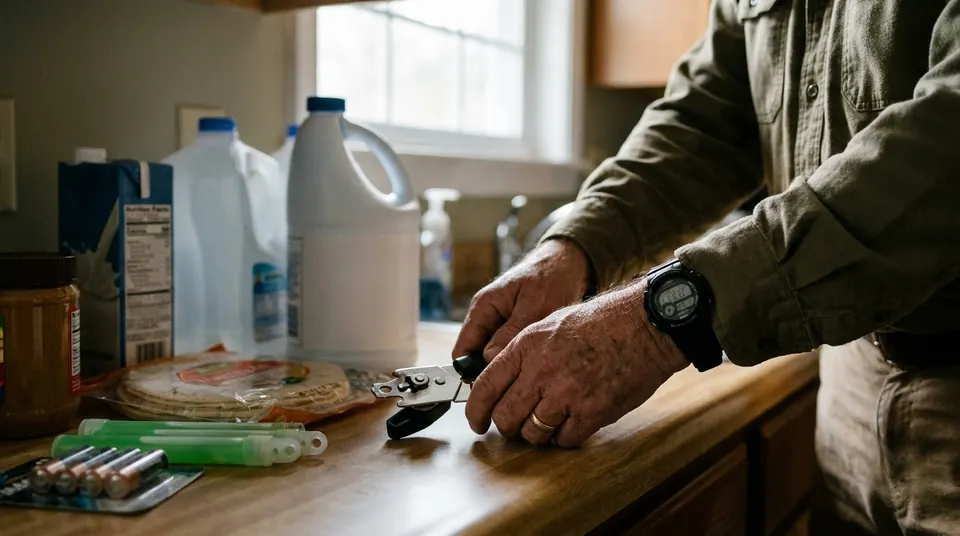
Smarter grab: no-cook calories. Peanut butter, crackers and ready-to-eat cans you can eat cold. Add a manual can opener, because it vanishes once people find their electric one is dead.
6. Little green propane bottles
One-pound bottles feed camp stoves and small heaters, so they go fast. They also cost several times more per pound than propane from a big tank. Most of what you pay for is metal and convenience.
Smarter grab: an adapter hose that runs a camp stove from a 20 lb grill tank. One full tank cooks for a long time. My propane exchange vs refill guide covers the cost per pound, and the propane runtime calculator tells you how long a tank lasts.
Safety: The big tank stays outdoors. Cook on the porch, away from walls and windows. Use a heater indoors only if it is rated for indoor use, and keep a battery-powered CO alarm in the room.
Plug-in CO alarms without a battery die with the grid. Check yours tonight.
5. Gas cans
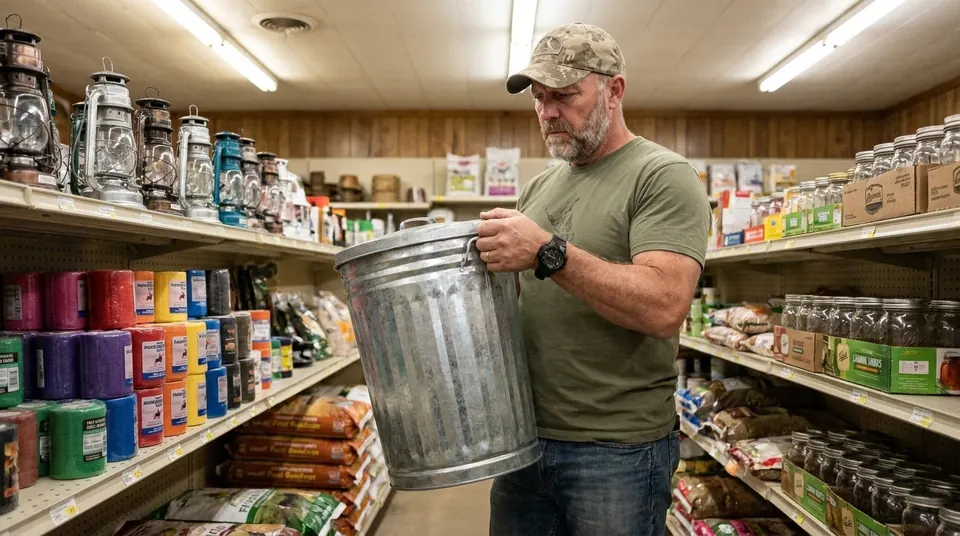
Gas stations store fuel underground, but the pumps need electricity. When the grid fails, the station can’t pump to you. The gas in your cans is all the fuel you have.
In 2007 the EPA issued a rule for portable fuel containers, effective in 2009, modeled on California’s earlier rules (CARB notice). New cans now have self-sealing spouts that cut fumes and spills. Most people hate them. An annoying can in your garage still beats a perfect can still on the shelf.
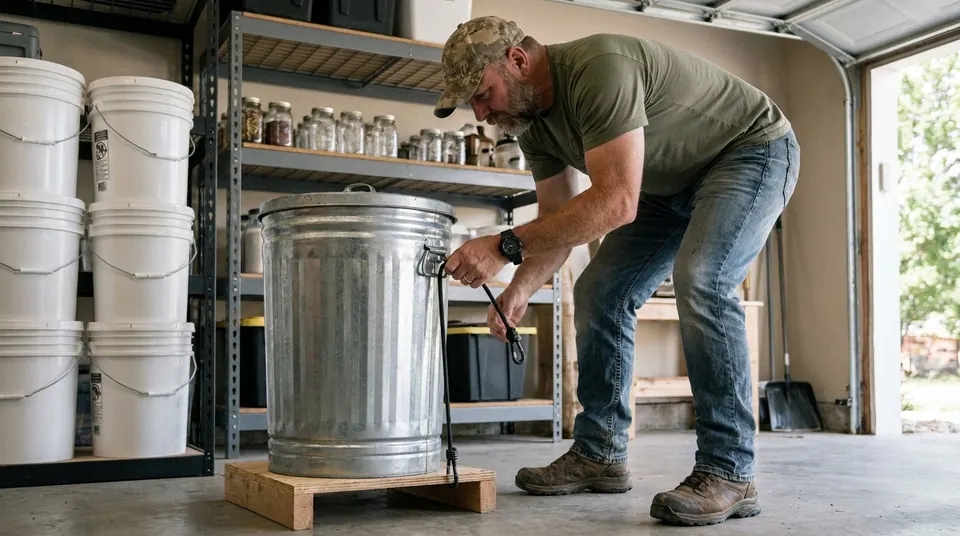
Smarter grab: buy cans now, plus fuel stabilizer, and add it when you fill. Plain gas goes stale. Rotate the old fuel into your car and refill. Store cans in a shed or detached garage, never in the house. My full guide to how to store gasoline has the details.
4. The kids’ medicine aisle
The first shelf to empty is children’s fever reducer. It happened in the winter of 2022 with the grid working fine. Pharmacies also run on computers and networks, so refills can stall in an outage.
In a long outage, the danger is simple. Fever and diarrhea drain the body of water. That is what turns a bug into an emergency.
Smarter grab: oral rehydration salts. They are packets you stir into clean water to replace salt and fluid, and the little bit of sugar helps the gut absorb it. Check the expiry date on the box. Add adult antidiarrheal tablets if you like, but kids need a doctor’s say first. Any child with a high fever or signs of dehydration needs a doctor.
3. Baby formula
America saw this preview in 2022. A Michigan plant, Abbott’s Sturgis facility, recalled products and shut down, and shelves went bare across the country. That was one plant, in a normal year.
Safety: Never make homemade formula and never water formula down to stretch it. Health agencies warn that homemade recipes can lack key nutrients, and babies were hospitalized in 2022 (Washington DOH). If you are stuck, call a doctor or WIC.
Smarter grab: if there is a baby in the house, stay about a month ahead on formula and rotate it, oldest can first. Keep diapers stocked, and a few cloth ones with covers as backup. Formula also needs clean water to mix.
2. Bottled water
A case of bottles doesn’t last a family a day. FEMA’s minimum is one gallon per person per day, to cover drinking and hygiene. For a family of four, that is 28 gallons for a week.
Smarter grab: gallon jugs from the bottom shelf, which hold more water per dollar. Add a couple of empty collapsible containers from sporting goods. They fold flat today, and you fill them from the tap before pressure drops. For bigger storage, see stock tank water storage.
1. Plain bleach
Bleach is last on the sellout list because nobody thinks of it. It sits in the laundry aisle for a few dollars while people fight over cases of water.
The EPA’s emergency table gives the dose for clear water: 8 drops per gallon of 6% bleach, or 6 drops for 8.25%. Stir, wait 30 minutes, and the water should smell faintly of chlorine. If it doesn’t, add another dose and wait 15 more minutes. For cloudy, colored or very cold water, double the dose. Let cloudy water settle and strain it through a clean cloth or coffee filter first.
Use plain, unscented chlorine bleach with 6% or 8.25% sodium hypochlorite. Skip scented, splashless or color-safe types. The EPA says to use fresh bleach, or bleach stored at room temperature for under a year.
Here is the math, as a rough estimate: at about 8 drops per gallon and around 20 drops to the milliliter, one gallon jug has enough for several thousand gallons of water, if it is fresh. Bleach does not fix fuel or chemicals in water, and it is weak against some parasites. My iodine vs chlorine guide covers what it can and cannot do.
Army lesson: Disease killed about two out of three Civil War soldiers, by the National Park Service’s count. Bad water drove a lot of it. In WWI the Army fielded a canvas water bag dosed with chlorine, known as the Lyster bag after Army doctor William Lyster (history page). Household bleach is the same idea in a jug.
Summary: panic buy vs smarter grab
| Panic buy | Why it fails | Smarter grab | Rough cost |
|---|---|---|---|
| Bread, milk | Needs a fridge | Boxed or powdered milk, tortillas | A few dollars |
| Bagged ice | Melts fast | Block ice, water jugs in the freezer | Almost free |
| Paper plates | Wasted when skipped | Plates, foil, trash bags | A few dollars |
| Candles | Fire risk | Glow sticks, LED lantern | $5-20 |
| D batteries | Rack stripped | AA, lithium AA | $20-40 |
| Power bank | One or two refills | Car charger, offline maps | $10-25 |
| Snacks | Short on calories | Peanut butter, crackers, can opener | A few dollars |
| 1 lb propane | Costly per pound | Adapter hose for a 20 lb tank | $15-25 |
| Gas cans | Spouts, stale gas | Cans plus stabilizer | $15-30 each |
| Kids’ medicine | Sold out | Oral rehydration salts | A few dollars |
| Baby formula | Sold out | One month ahead, rotated | Varies |
| Bottled water | Under a day | Gallon jugs, collapsible jugs | $1-20 |
| Bleach | Rarely sold out | Plain unscented bleach | A few dollars |
Why shopping late costs you twice
You pay more and you get less. Late in the rush, you take whatever is left, and you buy it in a hurry. A rushed buyer picks the wrong battery size, the wrong fuel can or the wrong bleach.
Spread the buying over a few ordinary weeks instead. Add two or three items to each grocery trip. Rotate what you store: eat the oldest first, and put the newest at the back. Write the purchase date on bleach, formula and fuel with a marker.
Last, tell the people in your house where things are. A stocked closet is no use if only one person knows what is in it. Walk everyone through it once, and keep the list printed next to the supplies.
Cash, and the stores that stay open
When power is out, card readers and registers go dark. Stores that stay open often go cash only. Ready.gov notes that ATMs and banks may be closed during an outage.
Keep a little cash in small bills at home. Small bills matter, because a store with no register may not make change.
What to do this weekend
- Fill empty freezer space with water jugs.
- Buy 2 shelf-stable milk boxes, tortillas and peanut butter.
- Buy a manual can opener.
- Switch your lights and radio to AA. Add lithium and rechargeable AAs.
- Buy thick glow sticks and a battery LED lantern.
- Check that your CO alarm has a working battery.
- Buy an adapter hose for your 20 lb propane tank.
- Buy gas cans and stabilizer, and read the label.
- Pick up oral rehydration salts.
- Store 1 gallon of water per person per day for at least 3 days.
- Buy plain unscented bleach and write the date on it.
- Put a small stack of cash in small bills in a safe spot.
If you also shop at the farm store, see my Tractor Supply prepping items list.
Frequently asked questions
What sells out first in a power outage?
Water, bread, milk, ice, batteries, gas cans, propane bottles and candles go first. After a few hours, children’s medicine and baby formula follow. These are the items shoppers expect to need, so they are the ones everyone grabs at once.
What should I buy before the grid goes down?
Start with water, a way to treat it, no-cook food, a manual can opener, AA batteries, LED lights, a battery CO alarm, fuel for cooking and a car, and some cash. Buy it weeks ahead, not the morning of the storm.
How long does food last in a fridge or freezer without power?
Ready.gov says a closed fridge keeps food cold for about 4 hours and a full freezer for about 48 hours. Keep doors shut. Discard perishables that reached 40°F or warmer for two or more hours. When in doubt, throw it out.
How much water do I need per person?
FEMA says store at least 1 gallon per person per day, which covers drinking and hygiene. Children, nursing mothers and sick people may need more, and hot weather can raise it. For a family of four, that is 28 gallons for a week.
Are candles safe in a power outage?
Fire agencies say use flashlights instead. The US Fire Administration advises keeping any candle at least 12 inches from anything that burns, never leaving one unattended and not burning them in bedrooms. Battery LED lanterns and glow sticks remove the flame entirely.
Why do stores go cash only in an outage?
Card readers, registers and networks need power. Without them, a store may only take cash, and some may not make change. Keep a small stack of small bills at home.
Sources
- Ready.gov: Power outages
- Ready.gov: Water
- EPA: Emergency disinfection of drinking water
- CDC: Carbon monoxide
- US Fire Administration: Candle fire safety
- Illinois State Fire Marshal: Candle safety (citing NFPA data)
- National Park Service: Civil War deaths and disease
- Lyster bag history page (720th MP Battalion Reunion Association)
- Washington State DOH: Formula shortage and what to do
- California Air Resources Board: portable fuel container rule
- Energizer lithium AA spec sheet
- AOL: The strange item Walmart stocks up on before storms
General information, not medical or professional advice. In an emergency, call 911 and follow official instructions. Disclaimer.