SUPSupply Runs
Tractor Supply Prepping Items: 9 Cheap Buys Veterans Stock Up On
Nine farm-store buys that work for prepping: canning lids, steel cans, pine pellets, a lantern, propane refills, a stock tank, vet wrap, iodine and a syringe.
 By Mike Dawson
16 min read
BLUFBottom line up front
The best Tractor Supply prepping items are canning lids, a galvanized steel can, pine pellets for a bucket toilet, a hurricane lantern, a propane refill, a stock tank, vet wrap, 10% povidone-iodine and a large irrigation syringe. Most cost less than a restaurant meal.
- Farm stores sell sturdy, cheap versions of things preppers want: steel cans, stock tanks, lanterns and wound supplies.
- Livestock antibiotics are no longer sold off the shelf. The FDA made the last of them prescription-only in June 2023.
- With no antibiotics to fall back on, cleaning a wound well is the job: a big syringe, clean water, iodine around the edges, a dressing and vet wrap.
- Each item comes with a safety rule: lantern fuel, propane storage, tank weight, and not wrapping vet wrap tight.
- Animal products are not always labelled for people. Read the label, and treat stock tank water before you drink it.
Draw list What to get, and why
| Item | Why | Rough cost |
|---|---|---|
| Canning lids | The sealing compound works once. No lids, no home canning. | A few dollars a box |
| Galvanized steel trash can | Rodent-proof storage for feed, rice and beans | About $25-50 |
| Pine bedding pellets | Cover and deodorize a bucket toilet | About $6-12 per bag |
| Hurricane lantern and lamp oil | Wind-proof light that does not need batteries | About $20-40, oil a few dollars |
| Propane refill | A full tank, not a three-quarter one | Usually less than a swap |
| Stock tank, about 100 gal | Bulk water storage you fill from a hose | Roughly $100-200 |
| Vet wrap | Holds a dressing on without tape | A few dollars a roll |
| 10% povidone-iodine | Cleans the skin around a wound | About $10-20 for a large bottle |
| Large irrigation syringe | Flushes dirt out of a wound under pressure | About $1-5 |
Rather watch it?
I cover this in a video: 9 Cheap Items at Tractor Supply That Veterans Hoard Before Anyone Else.
Plays from YouTube when you click it.
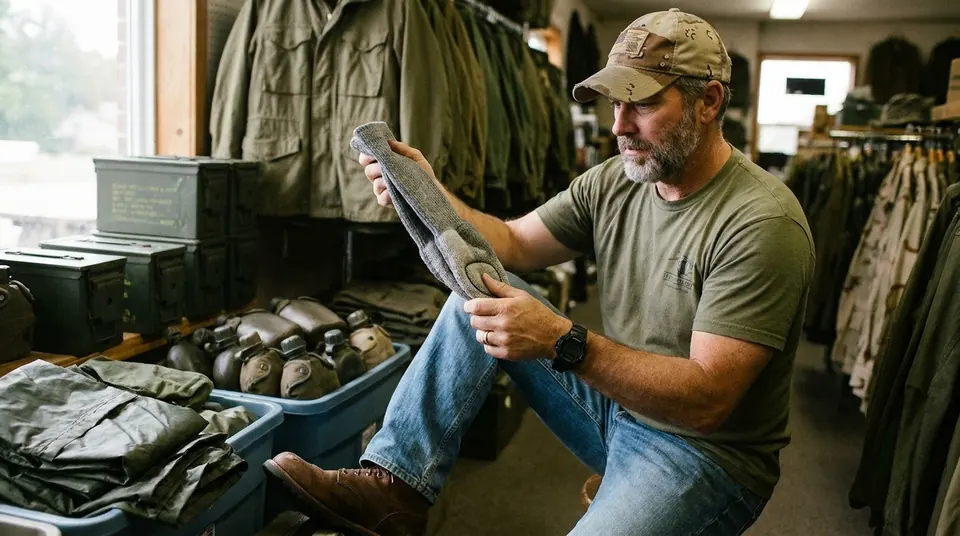
Some of the best survival gear in America is made for horses and cows. It sits at Tractor Supply at farm prices. Most people walk in for dog food and walk out with dog food. Veterans and old farm families shop those same aisles very differently.
These are the Tractor Supply prepping items veterans stock up on, nine cheap ones, and many cost less than a restaurant lunch. Plenty of veterans will know them, because the army learned what they are worth the hard way, long before anybody called it prepping.
This article is information, not medical care. Several items below deal with wounds. Take a hands-on first aid class, and see a doctor for anything serious.
Each item gets the same treatment: what it is, a rough price, why it matters when the grid is down, how to use it and the safety rule. Prices change, so treat every number as a ballpark.
The 9 Tractor Supply prepping items at a glance
| # | Item | What it does | Rough cost |
|---|---|---|---|
| 1 | Canning lids | Seal jars of home-canned food | A few dollars a box |
| 2 | Galvanized steel can | Keeps rodents out of food | About $25-50 |
| 3 | Pine pellets | Cover and deodorize a bucket toilet | About $6-12 a bag |
| 4 | Hurricane lantern | Wind-proof light without batteries | About $20-40 |
| 5 | Propane refill | Fills your own tank all the way | Usually under a swap |
| 6 | Stock tank | Stores 100 gallons or more of water | Roughly $100-200 |
| 7 | Vet wrap | Holds dressings on, no tape needed | A few dollars a roll |
| 8 | Povidone-iodine 10% | Cleans skin around a wound | About $10-20 |
| 9 | Large irrigation syringe | Flushes a wound under pressure | About $1-5 |
1. Canning lids
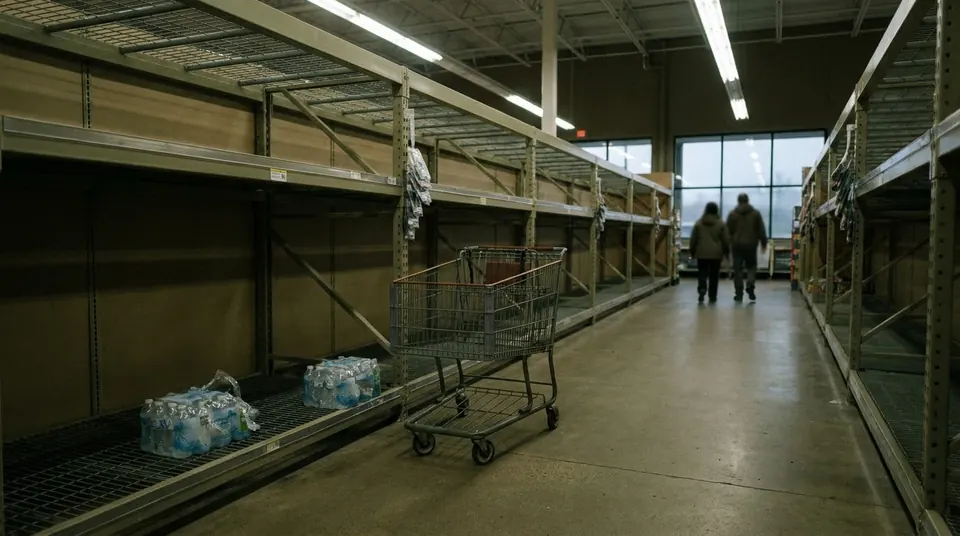
The cheapest thing in the canning aisle was harder to find than toilet paper one recent summer. Canning lids are the flat metal discs that sit on a mason jar under the screw band. A small box costs a few dollars. For most of their history nobody gave them a thought.
Then came 2020. People were stuck at home, and it felt like half the country planted a garden at once. By late summer everyone went looking for lids in the same few weeks. Shelves went bare and stores put limits on them. Then the fakes showed up online. The sealing ring on some of them would not grab, so people put up a harvest and found out later that jars had spoiled.
Here is why the lid is the whole game. A glass jar can outlast you. The band lasts for years. But the sealing compound on a two-piece lid is made to work once. Extension services say the same: Penn State Extension tells canners to use a new flat lid every time, and the bands are reusable if they are not rusty or bent. If the trucks stop coming, you could have a basement of jars and a garden of food and no way to seal them.
How to buy and store them:
- Keep lids in the box, somewhere cool and dry. Heat and time can harden the sealing ring.
- Buy a real brand from a real store. This is one more reason the farm store beats a random deal online.
- Stock more than you think you need. A busy summer can burn through a few dozen.
- If you want a long-term backup, look at reusable lids with a separate rubber ring. They work, but they have a learning curve. Practice in a normal summer, when a failed jar is a lesson and not a lost winter of food.
Safety rule: if a jar’s lid flexes, pops or leaks, do not eat what is inside.
Full details are in my guide on whether you can reuse canning lids.
2. A galvanized steel trash can
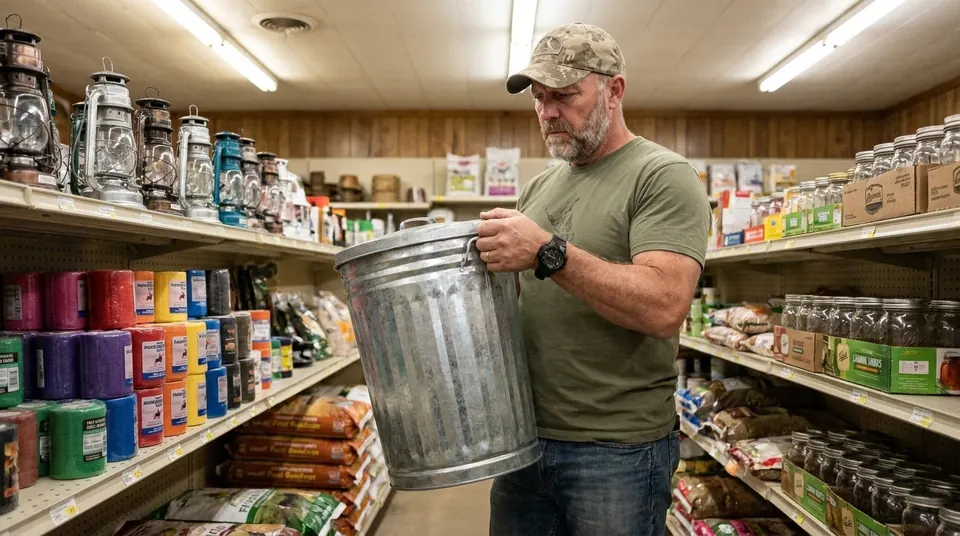
A plain steel can is one container in the store that a rat cannot eat its way into. By the best known account, long before GI meant a soldier, army supply clerks used it for galvanized iron, the metal in cans like this one. The name started on the trash cans and ended up on the men. The history is argued over, so I’ll say “best known account” and leave it there.
Walk past the feed room in any old barn and you will see a row of them, full of grain and chicken feed. Farmers did not choose them for looks. They lost enough feed to rodents to know what works.
Rodent teeth never stop growing, so mice and rats chew on everything. A mouse can get through a paper sack in a night, and plastic is soft to a rat that wants in. The Texas A&M extension service says a mouse can get through a hole about the size of a dime, a 1/4 inch gap. A dented lid is an open door.
How to use it:
- Keep food in its own sealed bags or buckets, and put those inside the can. The steel is the armor and the bag is the second wall.
- Set the can on a board, off the concrete, so damp does not rust out the bottom.
- Run a bungee cord over the lid and hook both handles. This also stops raccoons. Raccoons are better with lids than most toddlers.
A metal can in a garage corner also looks like trash, not food. The full setup is in rodent proof food storage.
3. Pine pellets for a bucket toilet
Pine bedding pellets are made for horse stalls, and they may be the best toilet upgrade in the store. In many towns, electric pumps push the water in your pipes. If the power stays out long enough, pressure drops and the taps stop. Your toilet turns into a very expensive chair.
You can pour a bucket of water into the bowl to flush it. That burns through water you need for drinking, and it burns through it fast. The simple fix is a bucket toilet: a sturdy bucket, a heavy trash bag, and a snap-on seat.
The hard part is what goes in the bag. Without something to cover it, a bucket is unbearable in about a day. Pine pellets are pressed sawdust. When they get wet, they swell and fall apart into fluffy sawdust. A scoop after each use soaks up liquid and the pine cuts the smell. One big bag costs about what takeout does and lasts a long time.
How to use it:
- Put a layer in the bottom of the bag before first use.
- Add a scoop of pellets after each use.
- Tie off full bags and store them outside in a covered can until services come back. Check local rules on disposal.
- Keep a bottle of hand sanitizer next to the bucket.
Army lesson: In 1898, during the Spanish-American War, typhoid fever spread through US training camps. A War Department board led by Walter Reed, with Victor Vaughan and Edward Shakespeare, studied the outbreak. Estimates run to about 20,700 typhoid cases and roughly 1,500 deaths in the camps, against 385 US combat deaths in the war. Flies and contact between men spread it. Soldiers have had latrine rules drilled into them ever since: cover waste, and keep it far from food.
The lesson for your house: when the toilet quits, the waste becomes the most dangerous thing in it. Put the bucket in a room away from the kitchen, with the lid on when nobody is using it, and wash hands every time. You can read more in the Typhoid Board report in the NIH archive and the Task & Purpose history.
4. A hurricane lantern
A hurricane lantern got its name because it was built to stay lit in a gale. You have seen one: the old farm lantern with a glass globe and a metal tube up each side. Hot air rises out of the top, and the tubes pull fresh air down and feed it to the flame from below, behind the glass. A gust has a hard time reaching the flame.
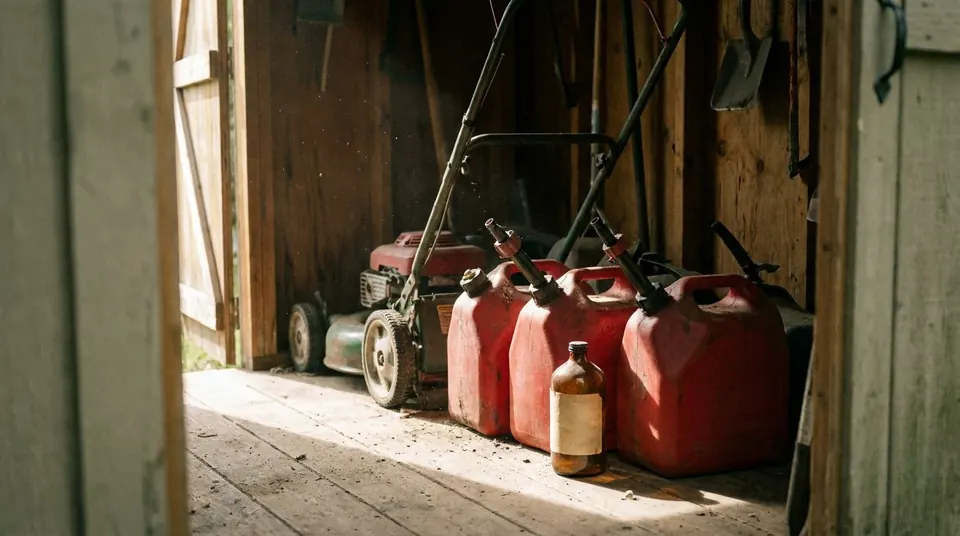
It runs on kerosene or lamp oil. Gasoline goes stale in a few months and batteries drain in a drawer. Sealed lamp oil keeps for years, so a lantern and a jug of oil on a shelf is light that waits for you. A good one burns all night on a single fill. Keep a spare wick or two, because the wick is the part that wears out.
Safety: Never pour camp fuel or gasoline into a wick lantern. Those fuels give off vapor that can flare up in your hand. Use only kerosene or lamp oil, the fuel the lantern was made for. Fill it outdoors when it is cool.
More rules:
- Trim the wick flat so the flame burns clean.
- Set it on a steady surface, away from curtains, and out of reach of kids and dogs.
- Any flame indoors uses up air and gives off fumes. Crack a window and keep a battery-powered carbon monoxide alarm in the room. A plug-in alarm with no battery backup is dead the moment the power goes out. The CDC recommends a battery-operated or battery backup detector.
One lantern throws enough light to cook dinner and play cards by.
Fuel types, burn times and the full safety list are in kerosene lantern safety.
5. A propane refill
If you have only ever swapped tanks at the cage outside a gas station, you have been getting shortchanged. An exchange tank holds about 15 lb of propane in a 20 lb cylinder. That is about three quarters, for about the same price.
It used to be fuller. In 2008, the two biggest exchange companies, Blue Rhino and AmeriGas, each cut the fill from 17 lb to 15 lb without cutting the price. The Federal Trade Commission said they coordinated that cut. They settled the charges in October 2014. Swap tanks still come at 15 lb today.
The better way: many Tractor Supply stores refill your own tank on the spot. You pay for the propane that goes in. Call first, as not every store does it.
Things to know:
- Propane does not go bad. Sealed in a cylinder, it is as good years from now as the day it went in. That makes it one of the best fuels you can store.
- Look at the collar of the tank, the metal ring around the valve. There is a date stamped into it. Old tanks must be inspected and recertified before they can be filled. A common rule is 12 years from the manufacture date, then re-inspection, but stamp codes vary, so ask the filler or check the details. The exchange cage handles this for you. With a refill, it is on you. Check the date now, not on the day the line is wrapped around the building.
Safety: Store propane tanks outside, upright and in the shade. Never inside the house or in a closed garage. Grills and camp stoves stay outdoors every time, because they make carbon monoxide.
For the cost-per-pound math and the date stamp, read propane exchange vs refill.
6. A stock tank
A stock tank is a big galvanized or poly tub made for cattle, and it holds more water than most homes have stored. Tractor Supply sells them from small tubs of about 23 gallons up to 8 ft round tanks rated at 700 gallons. A middle-size one holds around 100 gallons.
Ready.gov says to store at least 1 gallon per person per day. By that math, 100 gallons is about 25 days for a family of four. The tank costs about what the same water would in bottles, once. After that, the hose fills it for free.
When a storm is coming, or the town warns the water may go off, run the garden hose into it while the taps still work. It also fills under a downspout, and rainwater is fine for flushing and the garden.
Rules that come with it:
- Cover it. Open standing water becomes a mosquito nursery, and a full tank is a drowning risk for small children and pets. A sheet of plywood, weighted down, does the job.
- Treat the water. Stock tanks are sold for animals and the label does not promise drinking water. Filter it, then boil or bleach it before anyone drinks it. Keep roof water for flushing and the garden.
- Mind the weight. Water is 8.34 lb a gallon, so 100 gallons is about 835 lb. Never set a tank on a deck or balcony. Put it on level ground or a slab, where it will stay, before the first drop goes in.
The full guide is stock tank water storage.
7. Vet wrap
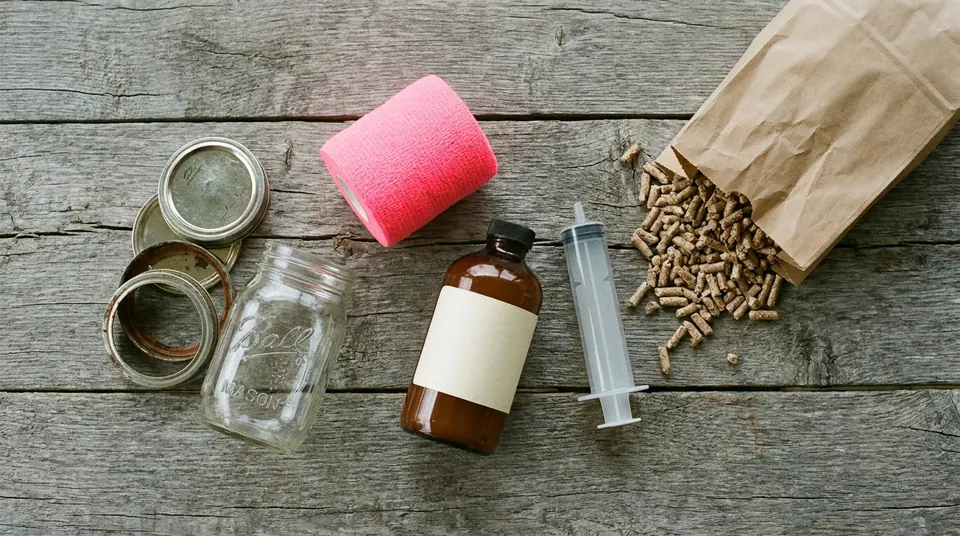
Vet wrap is a roll of bright, stretchy bandage from the horse aisle, a close cousin of what hospitals use. Horse owners wrap legs with it to hold a dressing on or to protect a leg in the trailer. It comes in loud colors like neon pink and lime green and costs a few dollars a roll.
It does one clever thing: it sticks to itself, not to skin or hair. When you change it, it peels off without ripping out arm hair or tearing sore skin. If a nurse has ever wrapped your arm after a blood draw with a stretchy colored band, you have worn the human version.
What it is good for:
- holding a dressing over a wound so the gauze does not slide off;
- staying put through sweat and rain, where tape quits when wet;
- gentle even pressure on a sprained ankle or wrist;
- tearing by hand, so you do not need scissors.
Safety: Never wrap it tight. Vet wrap is springy and keeps squeezing after you let go. Stretch it only a little, and overlap each turn by about half. Then check: fingers or toes past the wrap should stay pink and warm. If they turn pale, blue, cold or tingly, take it off and redo it looser. Check again later, because an injured limb swells.
Why stock it? In a long emergency, a small cut on your hand is a bigger deal. You are splitting wood, hauling water and fixing things. A dressing that falls off is a wound that gets dirty. Buy several rolls. They are cheap and light.
8. Povidone-iodine 10%
Povidone-iodine is the brown solution surgeons paint on skin before they cut. At the drugstore it comes in a tiny bottle at a price that makes you squint. At the farm store it sits on the shelf in big jugs, used by ranchers on cuts and scrapes. Check the label: the farm bottle is often the same 10% strength as the drugstore kind, in a much bigger bottle for less money.
Most people use it backwards. Here is how:
- Full strength is for the skin around a wound. Paint the edges. It is not meant for pouring deep into a cut, where it can irritate the tissue that is trying to heal.
- To rinse a wound, dilute it with clean water until it is about the color of weak tea. A small splash in a cup of water usually gets there. That is a rule of thumb, not a lab dose.
- Buy the plain solution. The scrub version on the same shelf has soap mixed in. You do not want soap in an open wound.
Safety rule: if iodine has ever given the person a rash, or they have an iodine allergy, do not use it. Ask a doctor first if the person has a thyroid condition or is pregnant. Use plain clean water instead.
Kept in its dark bottle, out of the sun, a big jug of this will outlast most of the other medical supplies in your house. For decades, US soldiers also treated canteen water with iodine tablets, so plenty of veterans can still taste it.
9. A large irrigation syringe
This is the cheapest item on the list. A big plastic syringe with no needle costs a dollar or a few dollars. It is also the most useful, and here is why.
For decades, a farmer could pick up livestock penicillin and similar antibiotics right off the shelf, with no vet and no paperwork. Plenty of preppers bought them as backup medicine. Then the FDA changed that.
Why the antibiotic shelf is empty
Under the FDA’s Guidance for Industry #263, the last over-the-counter medically important antimicrobials for animals moved to prescription. The change took effect on June 11, 2023. Now a vet has to sign off. The agency’s reason was antibiotic resistance, and that is a real concern. Before that, the FDA had already placed about 96% of these drugs under vet oversight.
Do not treat yourself or your family with animal antibiotics. The doses and the diagnosis are not the same, and an infection that needs an antibiotic needs a doctor.
So the smart move is prevention. With a wound, prevention mostly means one job: get it clean, fast and thoroughly.
How army doctors thought about it
In World War I, before penicillin existed, a French surgeon, Alexis Carrel, and an English chemist, Henry Dakin, developed a system of flushing wounds again and again with a mild chlorine solution. It was washing, done thoroughly and often.
How to irrigate a wound
A splash under the faucet runs off the top. Dirt and germs sit down inside, and it takes pressure to lift them out. A big syringe pushes water through a narrow tip with real force.
- Stop heavy bleeding first. Press on it. If it will not stop, call 911.
- Fill the syringe with clean water.
- Hold the tip close to the wound and push hard. Do it again, and again, until it looks clean.
- Tilt the wound downhill so the dirty water runs away. Protect your eyes, since it splashes back.
- Paint iodine around the edges, not in the wound.
- Cover it with a clean dressing and hold it with vet wrap, not too tight.
What do you fill it with? Safe tap water works. A Cochrane review on water for wound cleansing by Fernandez and Griffiths found no evidence that saline works better than tap water. If your water is not safe to drink, boil it and let it cool all the way first.
I want to be fair here. A syringe will not cure an infection that has already set in. Spreading redness, red streaks, pus or a fever mean that wound needs real medical help, whatever it takes to get it. Deep wounds, animal bites, punctures and wounds with gaping edges need a doctor in the first place. Check your tetanus shot date too.
Buy several syringes. Bigger is better, and a curved tip helps in a deep cut. Keep a couple in the house kit and a couple in the car. A wound you clean today is an infection you never have to treat. See the full steps in how to clean a wound.
What to do this weekend
Print this page and use it as the list.
- Buy a box or two of canning lids and store them cool and dry.
- Pick up a galvanized can and a bungee cord.
- Buy a bag of pine pellets, a bucket, a seat and heavy trash bags.
- Get a hurricane lantern, lamp oil, spare wicks and a battery CO alarm.
- Check the date stamp on your propane tank, then ask about a refill.
- Choose a spot for a stock tank, a level one, before you buy.
- Add vet wrap, 10% povidone-iodine and two big syringes to the first aid kit.
- Sign up for a first aid class.
Frequently asked questions
What are the best prepping items at Tractor Supply?
The best buys are the ones with a clear job: canning lids, a galvanized steel can, pine pellets for a bucket toilet, a hurricane lantern, a propane refill, a stock tank, vet wrap, povidone-iodine and an irrigation syringe. Most cost a few dollars to a few tens of dollars.
Can you still buy antibiotics at Tractor Supply?
Not the injectable or oral antibiotics that used to be sold over the counter. The FDA moved the last medically important animal antibiotics to prescription in June 2023, so a vet has to approve them. Do not use animal antibiotics on people.
Does Tractor Supply refill propane tanks?
Many stores do, but not all. Call your local store first. A refill fills your own tank, where an exchange tank usually holds about 15 lb in a 20 lb cylinder. Check the date stamp on your tank collar, since old tanks need to be recertified before filling.
Is a stock tank safe for drinking water?
Not as sold. Stock tanks are made for livestock and are not labelled for drinking water. Wash and sanitize the tank, cover it, and filter and boil or bleach the water before anyone drinks it. Use roof runoff for flushing and the garden.
Is farm store povidone-iodine the same as the drugstore kind?
It is often the same 10% solution in a bigger bottle. Check the label. Buy the plain solution, not the scrub with soap, and do not use it if there is an iodine allergy.
Sources
- FDA: Transition of over-the-counter medically important antimicrobials for animals to prescription status
- FTC: Blue Rhino and AmeriGas settle charges (October 2014)
- Report on the Origin and Spread of Typhoid Fever in U.S. Military Camps during the Spanish War of 1898 (NIH PMC)
- Task & Purpose: Disease in the Spanish-American War
- Penn State Extension: Canning jars and lids
- Texas A&M AgriLife Extension: Rodent IPM
- Ready.gov: Water
- CDC: Carbon monoxide poisoning prevention
- Paraco Gas: Propane cylinder requalification explained
- Tractor Supply: CountyLine 23 gal. galvanized stock tank
- Tractor Supply: CountyLine 8 ft round stock tank, 700 gal
- Cochrane review summary: Water for wound cleansing (Fernandez and Griffiths)
General information, not medical or professional advice. In an emergency, call 911 and follow official instructions. Disclaimer.