Are Kerosene Lanterns Safe Indoors? Blackout Lighting, Ranked
Are kerosene lanterns safe indoors? What the fire agencies say, how to use a hurricane lantern with care, and safer blackout lights that beat candles.
 By Mike Dawson
9 min read
BLUFBottom line up front
A kerosene lantern can be used indoors with care, but it is an open flame and a fire and carbon monoxide risk. Use only clear kerosene or lamp oil, fill it outside, ventilate, and keep a battery CO alarm. LED lights and flashlights are safer, and fire agencies recommend them first.
- A hurricane lantern is an open flame. Fire agencies say use flashlights instead of candles in an outage.
- Use only clear, undyed kerosene or lamp oil made for wick lamps. Never gasoline, camp fuel or white gas.
- Fill and refuel outdoors, with the lantern cool and off.
- Open a window a little and run a battery-powered CO alarm. Plug-in alarms die with the grid.
- LED lanterns, headlamps and glow sticks are the safer main lights. A lantern is a backup.
Draw list What to get, and why
| Item | Why | Rough cost |
|---|---|---|
| Hurricane (tubular) lantern | Sturdy, wind-proof, tips less easily than a candle | About $20-40 |
| Clear kerosene or lamp oil | The right fuel for a wick lamp | About $10-25 per gallon |
| Spare wicks | A trimmed wick burns cleaner | A few dollars |
| Battery-powered CO alarm | Open flames use oxygen and make some CO | About $25-40 |
| LED lantern and headlamps (AA) | No flame, safe for kids and pets | About $15-30 each |
| Thick emergency glow sticks | Light with no flame, for kids and bedrooms | About $10-15 per pack |
Rather watch it?
I cover this in a video: 13 Items That Disappear From Walmart in the First 5 Hours of Grid Collapse.
Plays from YouTube when you click it.
When the lights go out, people grab the oldest light there is: fire. Candles, oil lamps, a lantern from the barn. It feels like a cozy fix. It is also how a bad night gets worse.
So, are kerosene lanterns safe indoors? They can be used with care, and many people do. But they are an open flame, they use up oxygen and they make some carbon monoxide. Fire agencies lean toward battery lights first.
I’m a veteran, and soldiers carry chem lights partly because they can’t start a fire. The same logic works at home. Use the lantern as a backup, and learn the rules before you need it.
Are kerosene lanterns safe indoors?
Here is the honest answer. A lantern is safer than a candle in some ways. The flame sits inside a glass chimney, and a good lantern has a steady base. It is not safe the way an LED is safe.
Fire agencies are cautious. The US Fire Administration says to use flashlights instead of candles during a power outage. Ready.gov tells every household member to keep their own flashlight. One Maryland city’s guidance says to avoid both candles and kerosene lamps. These agencies are not wrong. A battery light cannot start a fire.
If you use a lantern, treat it like a stove. One lit lantern, in a room you are in, on a flat surface, with a window cracked.
How a hurricane lantern works
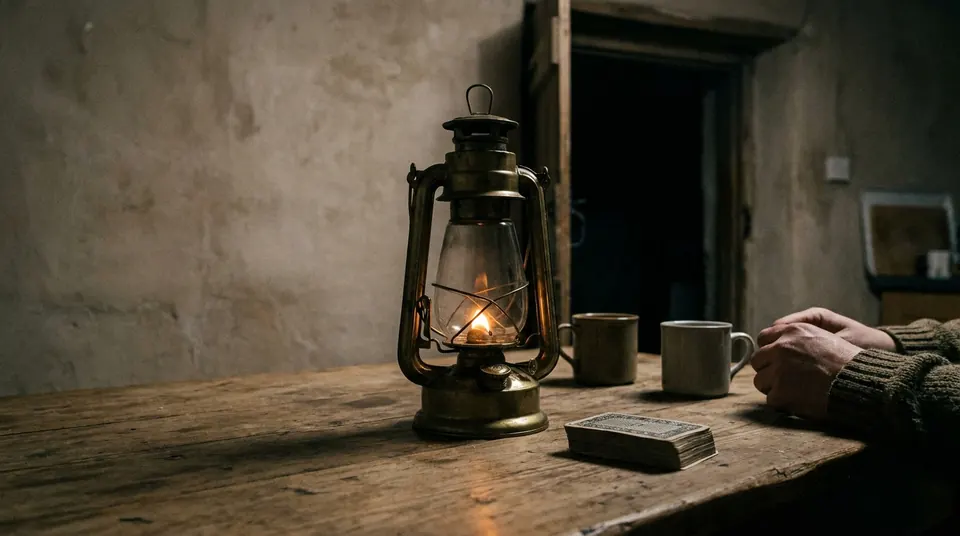
A hurricane lantern, also called a tubular lantern, has a fuel tank (the fount), a cloth wick, a burner and a glass globe. Fuel climbs the wick by capillary action. The flame burns at the top.
Air comes in through the base, runs up the metal tubes and feeds the flame. That is how it keeps burning in a draft. The globe lifts for lighting, and a knob raises or lowers the wick to set the flame.
The design is old and proven. The R.E. Dietz Company dates to 1840 in New York, and its railroad-style lanterns became a standard on farms and rail lines.
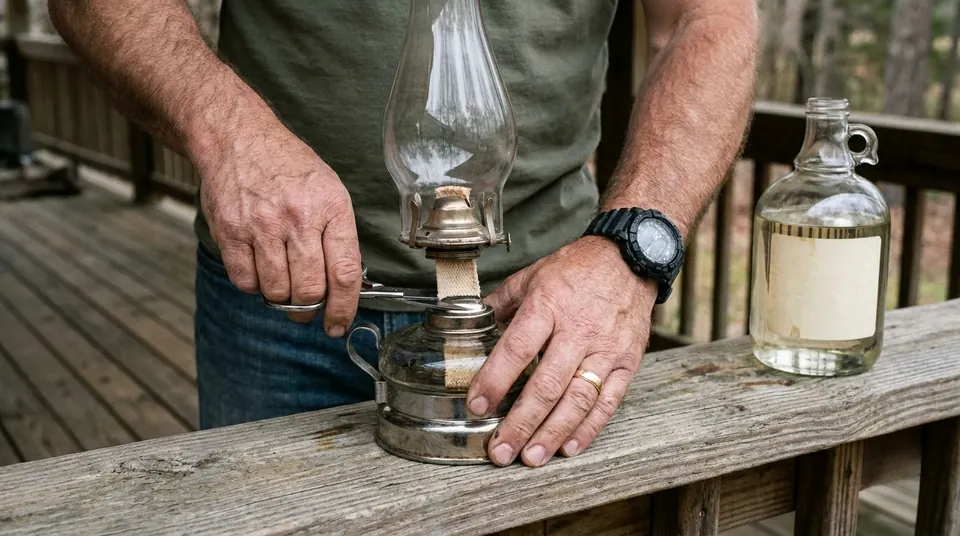
Kerosene vs lamp oil: which fuel to use
Use fuel made for wick lamps, and nothing else.
| Fuel | OK in a wick lantern? | Notes |
|---|---|---|
| Clear, undyed kerosene (K-1) | Yes | Burns clean when the wick is trimmed |
| Clear paraffin lamp oil | Yes | Check the maker’s manual; some lanterns soot or smell more |
| Citronella oil | Outdoors only | Per Outdoor Life’s fuel guide |
| Gasoline | Never | Explosive vapors |
| Camp stove fuel, white gas | Never | Wrong fuel, vapors ignite |
| Diesel, paint thinner, solvents | Never | Not made for wicks |
Outdoor Life’s guide to oil lamp fuels lists clear, undyed kerosene and standard clear lamp oil as acceptable. It lists gasoline, Coleman fuel, white gas, paint thinner and diesel as off limits. Sources disagree on whether K-1 or paraffin oil is better, so check your lantern’s manual.
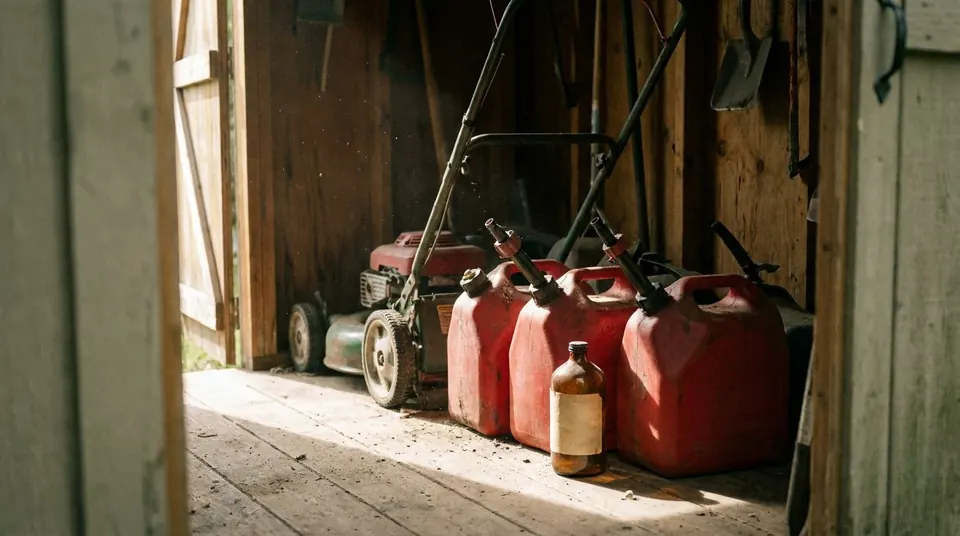
Safety: Never put gasoline, camp fuel or white gas in a lantern, even a little. The vapors can flash. If you buy kerosene at a gas station, use a clean, labeled can and keep it apart from your gasoline cans. See how to store gasoline.
How to use a lantern safely
- Fill outdoors. Turn the lantern off and let it cool first. Use a funnel. Wipe any spill and let the fumes clear before you light it.
- Trim the wick. Cut it flat, and keep it short enough that the flame does not smoke. A tall wick makes soot and heat.
- Light with the globe lifted, then lower it and adjust the flame.
- Set it on a steady, flat, non-flammable surface. A table, not a shelf. Keep it away from curtains, bedding, papers, kids and pets.
- Stay in the room. Never leave it burning when you leave or sleep.
- Turn it off by lowering the wick, not by blowing across the top of a hot globe.
- Let it cool before you move it.
The US Fire Administration’s 12-inch rule for candles is a sensible minimum here too: keep anything that burns at least 12 inches away from the flame.
Ventilation and carbon monoxide
Any open flame uses oxygen and makes some carbon monoxide. A single lantern in a leaky house is a small risk. In a tight, shut-up house with other flames running, it adds up.
Crack a window or door. Do not run a lantern in a bedroom. Run a battery-powered CO alarm. CDC says to install battery-operated or battery-backup detectors near sleeping areas. A plug-in alarm with no battery dies the moment the grid does.
Symptoms of CO poisoning look like the flu: headache, dizziness, nausea. If more than one person in the house feels unwell, go outside and call 911.
Safety: Do not use a gas stove or oven to heat your home, and never bring a grill or camp stove inside. Ready.gov lists these as common causes of CO poisoning in outages.
Candles during a power outage
Candles are the most common blackout light, and the one to skip. The NFPA’s candle data, as reported by the Illinois State Fire Marshal, says about three in five home candle fires start when something that can burn is too close to the flame. In an outage, add tired people moving through a dark house.
Fire crews may also be slow. In a big outage, calls can be delayed and crews can be stretched. A small fire at the curtains can grow before help arrives.
If you must use candles, use stable holders, keep them 12 inches from anything that burns, and never burn them in bedrooms. Blow them out when you leave the room. Better yet, buy battery flameless candles, which the USFA recommends.
Better lighting: LED, headlamps and glow sticks
For most of a blackout, battery lights are the right main light.
- LED lanterns light a whole room. If one tips over, nothing catches fire.
- Headlamps keep your hands free for chores, cooking and kids.
- Glow sticks (chem lights) have no flame. Use the thick emergency kind from the camping aisle, not party bracelets. A child can hold one all night.
Standardize on AA
Pick one battery size. AA fits most headlamps, small lanterns and radios, so one batch of cells can fill in for any device. Lithium AAs cost more, but Energizer lists its lithium AA for about 20 years of shelf life and operation down to -40°F (spec sheet). Add rechargeable AAs and a small solar charger for the long haul.
For the shopping-list view, see what disappears first in what sells out first in an emergency.
Light sources compared
Figures are rough. Check each maker’s label.
| Light source | Burn time | Fire risk | CO | Shelf life of fuel |
|---|---|---|---|---|
| Candle | A few hours to a day, by size | High | Small | Wax keeps for years |
| Hurricane lantern (kerosene) | Many hours per fill, check the manual | Medium | Small | Rule of thumb: a year or more if sealed; check smell and clarity |
| LED lantern or headlamp | Tens of hours on low, by model | None from flame | None | Lithium AA about 20 years (Energizer) |
| Glow stick | One use, a few to about 12 hours by type | None | None | Printed on the package |
Where a lantern fits in a blackout plan
Think in layers. The first layer is a flashlight or headlamp for every person, kept where you can find it in the dark. The second layer is an LED lantern for the main room. The third is glow sticks for kids and bedrooms.
A kerosene lantern is the fourth layer. It is the one to reach for on a long outage when batteries run low, or outdoors, on a porch or in a barn, where ventilation is no problem. Outdoors, it is a good tool. Indoors, it is a tool you watch.
Keep the lantern and its fuel out of children’s reach. Teach everyone old enough that it gets hot, and that you never move it while lit. Store the fuel in a labeled can, apart from gasoline, and rotate it once a year as a rule of thumb. Check the lantern now, not on the night the lights fail. Wicks dry out, and globes crack.
Hurricane lanterns on the farm and the homestead
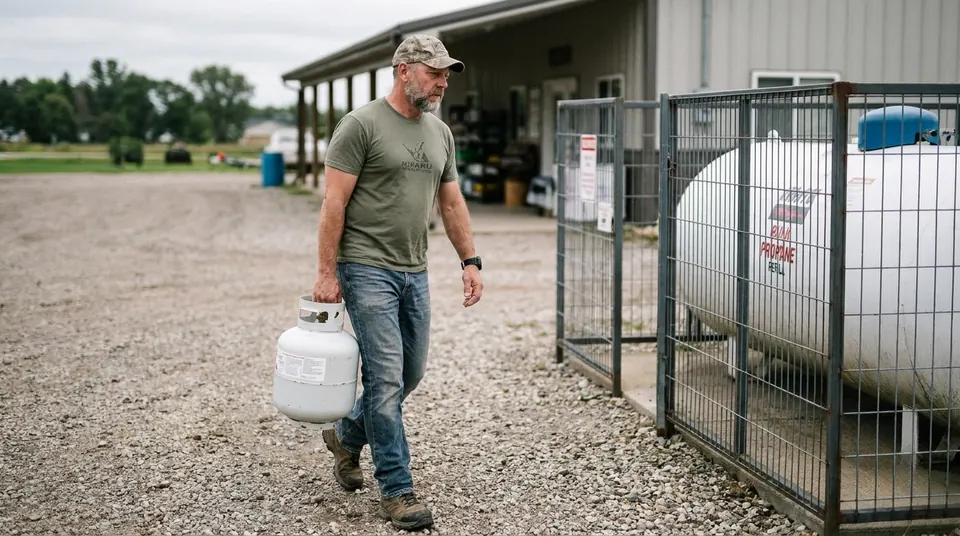
If you shop at a farm store, a hurricane lantern is one of the cheap, old-school items that earns a place on the shelf. I cover it in my Tractor Supply prepping items list. For cooking fuel instead of light, see propane exchange vs refill.
What to do this weekend
- Check that your CO alarm has a working battery.
- Buy one LED lantern and one headlamp per person, all using AA.
- Buy a pack of thick emergency glow sticks.
- If you own a hurricane lantern, read its manual, trim the wick and test it outdoors.
- Buy clear kerosene or lamp oil in a labeled can, kept apart from gasoline.
- Pick a flat, safe spot for the lantern, away from curtains.
- Practice lighting and filling it outside, in daylight.
Frequently asked questions
Can you burn a kerosene lantern inside the house?
Yes, many people do, but it is an open flame. Use clear kerosene or lamp oil, a steady surface, a trimmed wick and some ventilation, and keep a battery CO alarm running. Fire agencies prefer flashlights and LED lights because they carry no fire risk.
What is the safest emergency lighting for a power outage?
Battery LED lights and flashlights. The US Fire Administration says to use flashlights instead of candles in an outage. Glow sticks have no flame and suit kids. A kerosene lantern is a backup, not the main light.
Kerosene vs lamp oil: what’s the difference?
Kerosene is a petroleum fuel. Look for clear, undyed K-1. Lamp oil is a refined paraffin-based fuel sold for lamps. Both work in a wick lantern, but some lanterns burn one with less smoke or odor. Check your lantern’s manual.
Do kerosene lanterns produce carbon monoxide?
Yes, a small amount, like any open flame. It uses oxygen too. Crack a window, do not use one in a bedroom and run a battery CO alarm. Plug-in alarms without a battery fail when the power does.
Are candles safe during a power outage?
They carry real fire risk. The NFPA’s data says about three in five home candle fires start when something that burns is too close. Use flashlights or LED candles. If you use candles, keep them 12 inches from anything that burns, and never leave them lit.
Can I use gasoline or camp fuel in a hurricane lantern?
No. Gasoline, white gas and camp stove fuel are not made for wick lamps, and their vapors can ignite. Use only clear kerosene or lamp oil made for wick lanterns. Keep fuels in separate, labeled cans.
Sources
General information, not medical or professional advice. In an emergency, call 911 and follow official instructions. Disclaimer.