How to Spot a Fake Tourniquet (and Where to Buy a Real One)
Fake CAT tourniquets can snap when you need them. Here is how to spot a fake tourniquet, the red flags, where to buy a real one, and how to store it.
 By Mike Dawson
9 min read
BLUFBottom line up front
Check the seller first. Real Combat Application Tourniquets cost about $30-40 from the maker or an authorized dealer and come sealed. A price under $20-25, a loose unit in a surplus bin, a flat or missing lot number, or a bendy windlass rod all point to a fake. When in doubt, don’t trust it.
- A fake tourniquet fails at the worst moment: the windlass rod snaps or the strap slips under load.
- Seller and price tell you the most. Buy sealed, from the maker or an authorized dealer. Walk away from loose units and rock-bottom prices.
- Look at the markings, the windlass ribbing, the buckle, the base plate and the lot number. Sources differ on exact details, so compare with the maker’s current guide.
- Buy a trainer to practice on and keep the real one sealed.
- Take a hands-on Stop the Bleed class. This article is information, not training.
Draw list What to get, and why
| Item | Why | Rough cost |
|---|---|---|
| Real tourniquet (for example CAT Gen 7), sealed | From the maker or an authorized dealer only | About $30-40 |
| Trainer tourniquet | Practice on this one, so the real one stays new | About $10-25 |
| Stop the Bleed class | Hands-on practice with someone who knows what right looks like | Often free or low cost |
| Permanent marker and a small tag | To write the time of application | A few dollars |
| Hard pouch or kit bag, kept out of hot cars | Heat and sunlight age the plastic and strap | About $10-20 |
Rather watch it?
I cover this in a video: 11 Things Veterans Buy at an Army Surplus Store That Civilians Ignore.
Plays from YouTube when you click it.
A tourniquet is the one piece of first-aid gear you buy hoping you never use it. It is also the one piece where a counterfeit can cost a life. If you want to know how to spot a fake tourniquet, start with this: the fake looks the same on a shelf and fails under load.
This is information, not medical training. Take a hands-on class (see below) and call 911 for any serious bleeding while you work.
Cheap copies of the popular Combat Application Tourniquet (CAT) are sold on big shopping sites. Some end up in surplus bins next to real ones. Veterans check this item hardest before they pay, for a plain reason: you get one shot to use it.
Why a fake tourniquet is dangerous
A tourniquet works by pulling a strap tight around a limb, then locking it with a rod called a windlass. All the force sits on three parts: the strap, the buckle and the rod.
Reseller and training guides describe the same failures in fakes. The windlass rod bends or snaps. The buckle cracks. The strap slips and doesn’t fully stop blood flow. These are reports from sellers and trainers, not lab data, but they match each other, and the risk is easy to understand. A part that fails at a store counter is a nuisance. A part that fails on a bleeding person is not.
To be fair, a fake that holds is still possible. You can’t know ahead of time which kind you bought. That is the whole problem.
Army lesson: In a 2006 survey at a combat support hospital in Baghdad, Dr. John Kragh and colleagues followed patients with major limb injuries. Of 194 patients whose tourniquets went on before they reached the hospital, 22 died (11%). Of 38 whose tourniquets went on in the emergency department, 9 died (24%). The study is observational, so it shows a link, not proof. The message for you still holds: a tourniquet works best when a real one is at hand early.
The army didn’t learn this from a store shelf. It learned that gear in a pouch has to be the real thing, and that the person using it has to have practiced.
What a tourniquet can’t do
A tourniquet stops bleeding from an arm or leg. It does nothing for a wound in the chest, belly, neck or groin. It also isn’t a replacement for a hospital. The person still needs surgery. Use it, call for help, and keep the person warm and still until help arrives.
It can also cause harm. Pressure for a long time can damage nerves and tissue. In the Kragh survey, 4 of 232 patients (1.7%) had temporary nerve palsy at the tourniquet site, and tourniquets alone caused no amputations. That is a small risk next to bleeding to death, which is why guidance says to use one when bleeding is life-threatening.
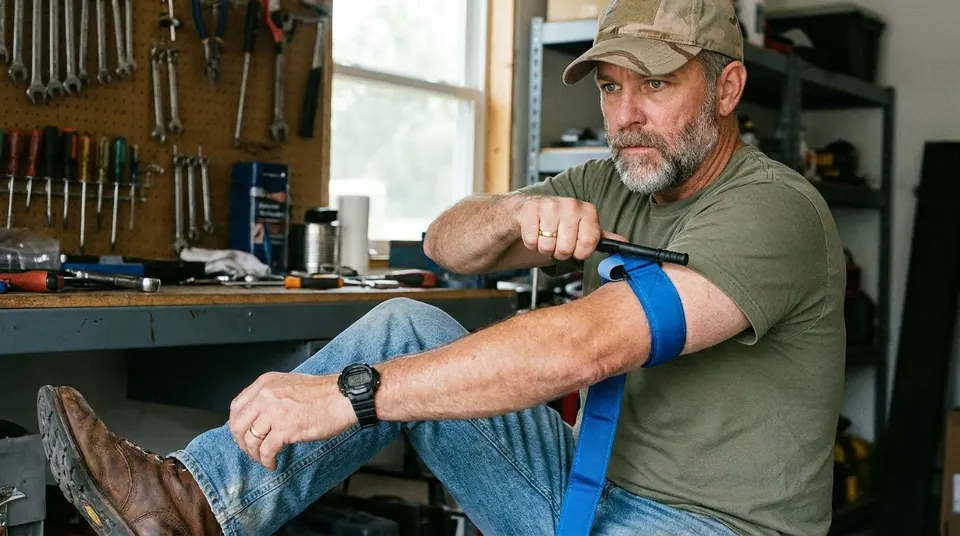
How to spot a fake CAT tourniquet
Start with the cheap checks, and work toward the detailed ones.
1. Price
Real CAT Gen 7 tourniquets are listed at roughly $27-40 from authorized sellers. Guides treat anything under about $20-25 as a red flag. This is a rule of thumb: a low price proves nothing alone, but a high price from a bad seller proves nothing either.
2. Seller and packaging
Buy from the maker (North American Rescue) or a dealer it lists. Skip marketplace sellers with no track record. The real thing comes sealed in the maker’s packaging. A loose tourniquet in a bin has no chain of custody, however new it looks.
3. The hardware
Training guides from several sellers agree on these points:
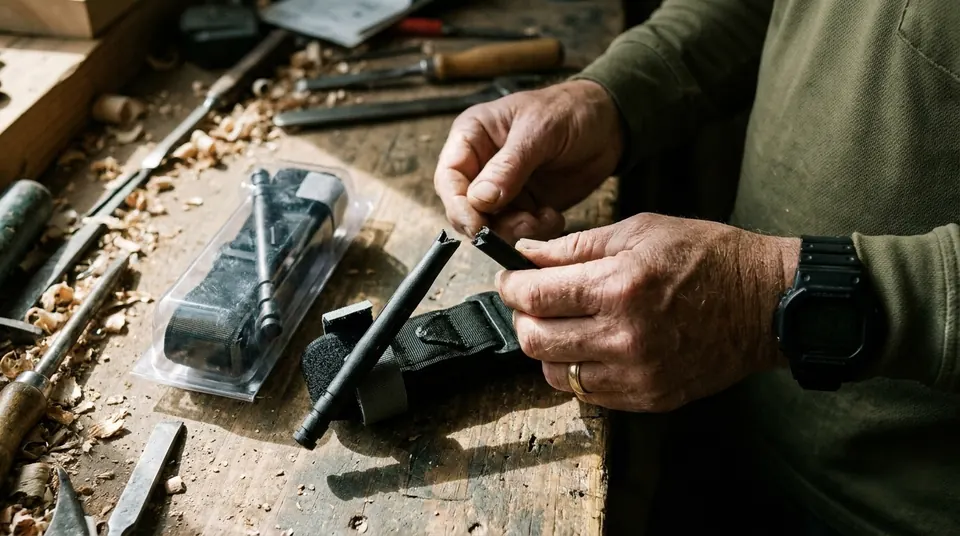
- Windlass rod: genuine rods are stiff and deeply ribbed. Fake rods have shallow ribbing and can flex when you twist them.
- Buckle: real buckles carry raised “CAT” lettering. Fakes often have flat or missing marks.
- Base plate: a real unit is marked on the plastic plate with maker and patent details and a lot number. Fakes may have a blank plate.
- Lot information: real units show lot information near the tail of the hook-and-loop band. It is often missing on fakes.
- Strap color and print quality: one guide says the time strap is gray on genuine Gen 7 units and white on fakes. Blurry print, odd fonts and uneven stitching are a bad sign.
Note: The guides don’t agree on exactly where each marking sits on a Gen 7. That is normal, since the design has been updated several times. Compare your unit against the maker’s current identification guide on its own website, and don’t rely on one blog.
4. The “TRAINER” marking
A trainer is a real-looking tourniquet made for practice. It should say so on the strap or packaging. Trainers are not for use on a bleeding person. Treat a tourniquet with no clear marking as unknown, and don’t mix trainers into your kit.
Where to buy a real tourniquet
- The maker’s own site, or a dealer it names as authorized.
- Medical suppliers that sell to EMS and fire departments, with a clear return policy.
- A surplus store, only when the item is still sealed in the maker’s packaging. Leave every loose one in the bin.
Check the seller list on the maker’s site before you order. If the shop isn’t on it, move on.
The army surplus guide covers the rest of the shelf: what to buy at an army surplus store.
Keep a trainer, keep the real one sealed
Buy two. One is a trainer for practice. The other is the real tourniquet, which stays clean, sealed and unused until the day it counts.
Practice with the trainer until you can put it on your own arm with one hand, fast. Then practice on your leg. Your hands will be slick and shaky on a real day, so the motions need to be automatic.
How a tourniquet is applied (the short version)
This is a summary of the steps that Tactical Combat Casualty Care (TCCC) guidance and bleeding-control courses teach. It is not a replacement for a class.
- Call 911 or get someone to call.
- Place the tourniquet directly on the skin, about 2-3 inches (5-8 cm) above the wound. Never put it over a joint such as the knee or elbow.
- If you can’t find the source of the bleeding, go “high and tight”: as far up the limb as you can.
- Pull the strap tight, then twist the windlass rod until the bleeding stops.
- Lock the rod in its clip and secure the strap.
- Note the time on the strap or a tag. Whoever takes over needs it.
- If bleeding doesn’t stop, TCCC guidance says to apply a second tourniquet side by side with the first.
It will hurt, and that is expected. A tourniquet that doesn’t hurt is probably too loose. Once it is on, leave it on until trained medical help takes over.
Safety: Pressure and a tourniquet are for life-threatening bleeding. For a scrape or a clean cut, see how to clean a wound instead. A tourniquet is not a first choice for small injuries.
For wounds in places a tourniquet won’t fit (groin, armpit, neck), see how to use an Israeli bandage and the notes on packing a wound.
Take a Stop the Bleed class
A class takes an hour or two and teaches you three things no article can: where to press, how hard to pack, and how tight is tight. The American College of Surgeons runs the Stop the Bleed program, and you can search for a nearby course on its site. The Red Cross also offers first-aid courses.
You practice with an instructor watching. That feedback is what turns a gadget in a bag into a skill.
Storage: heat, sunlight and regular checks
Keep your tourniquet where you can reach it fast, but not where it cooks.
- No hot cars. A closed car in summer gets far hotter than the outside air. Heat and UV can age plastic and strap material. Keep it in a shaded bag.
- Sealed until needed. If the real one is sealed, check the package for damage and the date when you buy it. Look at it a few times a year.
- Inspect the practice one. The trainer takes the wear, so check its strap and rod before each session.
- Keep it easy to reach. In a kit, a tourniquet should come out in a second, not after you dig through bandages. A rubber band or a tab on the pouch helps.
This is a rule of thumb: a tourniquet in a drawer you can’t find is no better than none.
What to do this weekend
- Look up the seller of any tourniquet you own. If you aren’t sure it’s real, treat it as a trainer.
- Buy one sealed tourniquet from the maker or an authorized dealer.
- Buy a trainer and practice one-handed on both arms and both legs.
- Sign up for a Stop the Bleed or Red Cross class.
- Put a pen and a tag in the pouch. Store the kit away from heat.
Frequently asked questions
How can you tell if a CAT tourniquet is fake?
Check seller and price first. Then inspect the buckle for raised “CAT” lettering, the windlass rod for deep ribbing, the base plate for maker and lot markings, and the strap for lot information. Compare against the maker’s current guide, because sources differ on exact marking spots. When unsure, treat it as unreliable.
How much does a real CAT tourniquet cost?
Authorized sellers usually list a genuine CAT Gen 7 for roughly $27-40. Prices change, so use this only as a rough guide. A price under about $20-25 is a warning sign. It does not prove a fake, but it is a good reason to check the seller closely.
Where should I buy a tourniquet?
Buy from the maker, North American Rescue, or a dealer it lists, or from medical suppliers that sell to EMS. A surplus store is fine when the item is sealed in the maker’s packaging. Avoid loose units, unknown marketplace sellers and sellers that can’t give you a lot number.
Can a counterfeit tourniquet still work in an emergency?
Maybe, but you can’t know. Trainers and reviewers report that fake rods bend or snap and fake straps slip. If a tourniquet is all you have and someone is bleeding badly, pressure and any device are better than nothing. Plan ahead so you never face that choice.
What is a tourniquet trainer?
A trainer is a practice tourniquet made to look and feel like the real one. You can use it again and again without wearing out the one you rely on. It should be marked as a trainer. Never use it on a real wound.
How high should a tourniquet go?
TCCC guidance places it about 2-3 inches above the wound, never over a joint. If you can’t find where the bleeding comes from, go high and tight, as far up the limb as you can. A class will show you the right feel.
Sources
- Survival With Emergency Tourniquet Use to Stop Bleeding in Major Limb Trauma (Kragh et al., Annals of Surgery 2009, PubMed)
- How to Spot a Fake CAT Tourniquet (True Rescue)
- Real v Fake: Identifying Fake CAT Tourniquet (High Ground Shooter)
- Beware Fake CAT Tourniquets (Rescue Essentials)
- Top 3 Ways to Know You Have a Fake CAT Tourniquet (Frontline Medical Defense)
- TCCC Guidelines, 25 January 2024 (JSOM)
- ACS Stop the Bleed
General information, not medical or professional advice. It does not replace hands-on training: take a Stop the Bleed or first aid class, and get real medical care for serious wounds. In an emergency, call 911 and follow official instructions. Disclaimer.