H2OWater
Iodine vs Chlorine Water Purification: What Bleach Can and Can’t Do
Iodine vs chlorine water purification: the EPA bleach dose per gallon, when iodine tablets make sense, what chlorine dioxide adds, what none of them remove.
 By Mike Dawson
8 min read
BLUFBottom line up front
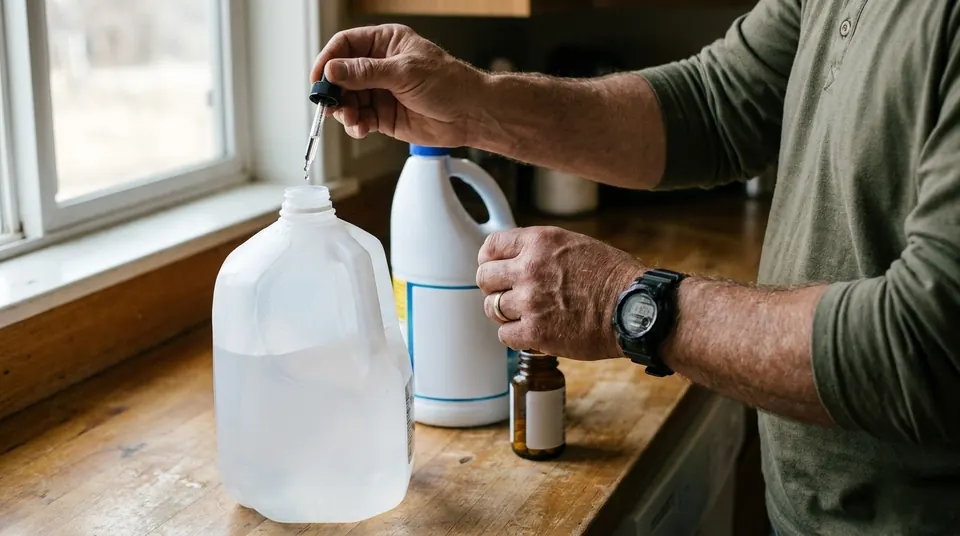
For clear water, EPA says add 8 drops of 6% plain unscented bleach per gallon (6 drops of 8.25%), stir and wait 30 minutes. Double the dose for cloudy, colored or very cold water. Iodine works for short use only. Boiling is best, and neither chemical fixes fuel or chemical contamination.
- EPA bleach dose for clear water: 8 drops per gallon at 6%, 6 drops at 8.25%. Double it for cloudy, colored or very cold water. Wait 30 minutes.
- Use plain, unscented bleach only. Fresh bleach, stored at room temperature for under a year, is the EPA standard.
- Iodine is for short-term use. CDC says avoid it if pregnant, if you have thyroid problems or if you are sensitive to iodine.
- Chlorine and iodine are weak against Cryptosporidium. Filter first, use chlorine dioxide per the label, or boil.
- Boiling is the gold standard: 1 minute, or 3 minutes above 6,500 feet (CDC).
Draw list What to get, and why
| Item | Why | Rough cost |
|---|---|---|
| Plain unscented bleach, 6% or 8.25% sodium hypochlorite | The cheapest water treatment you can buy | A few dollars a jug |
| Clean dropper or medicine syringe | For measuring drops and fractions of a teaspoon | A few dollars |
| Iodine tablets or chlorine dioxide tablets | Light, compact backup for a go-bag | About $10-20 per bottle or pack |
| Water filter, 1 micron or finer | Removes parasites that chemicals miss | About $20-50 and up |
| Coffee filters or clean cloth | To strain cloudy water before treating | A few dollars |
| Large pot and a heat source | Boiling is the best method | Most homes already have one |
Rather watch it?
I cover this in a video: 13 Items That Disappear From Walmart in the First 5 Hours of Grid Collapse.
Plays from YouTube when you click it.
When the tap runs under a boil notice and you can’t boil, you reach for a chemical. The two big choices are chlorine and iodine. Here is how iodine vs chlorine water purification works, which one the shelf makes cheap and easy, and where each one stops working.
The short version: plain bleach from the laundry aisle does most of the job for a few dollars. Iodine suits short trips. And no chemical fixes every problem in the water.
The bleach dose: copy the EPA table
The EPA’s “Emergency Disinfection of Drinking Water” page gives this table for regular, unscented liquid bleach added to clear water. Check the label: it will say 6% or 8.25% sodium hypochlorite.
| Water | 6% bleach | 8.25% bleach |
|---|---|---|
| 1 quart or 1 liter | 2 drops | 2 drops |
| 1 gallon | 8 drops | 6 drops |
| 2 gallons | 16 drops (1/4 teaspoon) | 12 drops (1/8 teaspoon) |
| 4 gallons | 1/3 teaspoon | 1/4 teaspoon |
| 8 gallons | 2/3 teaspoon | 1/2 teaspoon |
Then follow these steps, from EPA:
- Stir the water.
- Let it stand for 30 minutes.
- The water should have a slight chlorine smell. If it doesn’t, repeat the dose and wait 15 more minutes.
- If the taste is too strong, pour the water back and forth between clean containers and let it stand a few hours.
Cloudy, colored or very cold water: double the dose. For cloudy water, let it settle first and strain it through a clean cloth, paper towel or coffee filter.
Safety: Use only regular, unscented bleach sold for disinfecting and sanitizing. Skip scented, color-safe, splashless or “cleaner” bleaches, which carry additives you don’t want in drinking water. Measure with a clean dropper, not your hand.
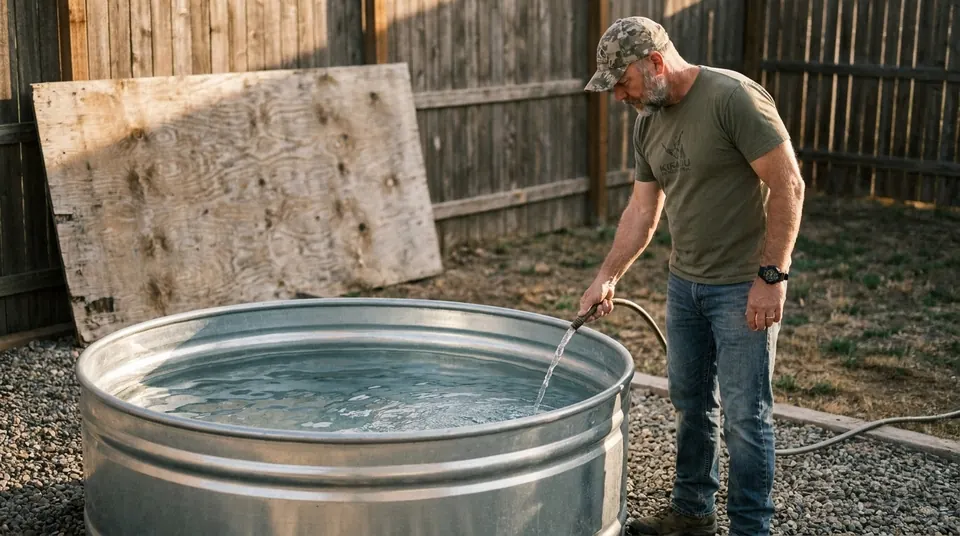
For other water-storage ideas, see stock tank water storage. A stored tank is only as safe as the treatment you give it.
Does bleach expire?
Yes, slowly. Bleach loses strength with age, heat and light. EPA says to use fresh bleach, stored at room temperature for less than one year. Sources vary on how fast the loss happens, so this is a rule of thumb: buy a new jug each year, keep it in a cool place away from sun, and write the purchase date on it.
A weak jug is the reason for the “slight chlorine smell” check. If you can’t smell chlorine after 30 minutes, repeat the dose, as EPA says.

What the army did: the Lyster bag
Army lesson: Before World War I, the US Army developed a canvas water bag that hung from a tripod. Soldiers dosed it with chlorine and filled canteens from small taps at the bottom. By the best known account it was designed by Major William J. L. Lyster of the Army Medical Department, so it’s called the Lyster bag. Some sources call it the “Lister bag,” but Lyster is the name in Army medical texts. It stayed in field use for decades. The idea of treating whole camp supplies with chlorine matters because camp diseases once did terrible damage.
Household bleach is the same trick in a jug. It is also one of the cheapest items on the shelf when everyone else is buying cases of bottled water. My guide to what sells out first in an emergency covers that rush.
Iodine tablets and drops
Iodine is the other classic. Military canteen tablets are made of a compound called tetraglycine hydroperiodide, and the Army’s field sanitation manual (TC 4-02.3) says to add two tablets to a one-quart canteen of the clearest water you have, then shake. The Army still issues iodine-based tablets, according to a Defense Health Agency document.
EPA’s page also gives a liquid option: 2% tincture of iodine, 5 drops per quart or liter (10 drops if the water is cloudy or colored), stirred and left for at least 30 minutes.
Pros:
- light and compact for a go-bag;
- long shelf life when sealed;
- works on most bacteria and viruses.
Cons:
- a medicine-like taste;
- slow in cold water;
- short-term use only.
Who should avoid iodine
CDC says to avoid iodine-treated water if you are pregnant, have thyroid problems or are sensitive to iodine. It also says no one should drink iodine-treated water for more than a few weeks at a time. For a long outage, bleach or boiling is the better plan.
For tablet doses and wait times, follow the label. Strengths differ by product.
Chlorine dioxide tablets
These work differently from bleach. Chlorine dioxide is a stronger disinfectant, and the tablets are often sold in camping aisles. CDC says chlorine dioxide kills Giardia and is “somewhat effective” against Cryptosporidium, and that filtering first is the safest approach. Its travel guidance says the tablets can work against Cryptosporidium when you follow the maker’s directions exactly, and that contact time can be several hours.
Because the sources differ, treat chlorine dioxide as a good backup, not a guarantee. Read the label, wait the full time and filter first when you can.
What none of the chemicals fix
Note: Chemicals are for germs. They are not a cure for every kind of bad water.
- Cryptosporidium: CDC says chlorine and iodine tablets won’t kill it. Boil, or filter with a pore size of 1 micron or smaller (or a filter certified to NSF 53 or 58 for cysts), and use chlorine dioxide if you are using a chemical.
- Fuel and chemicals: neither boiling nor disinfectants make water contaminated with fuel or toxic chemicals safe. If it smells of fuel, don’t drink it.
- Cloudy water: dirt shelters germs and eats up the chemical. Let it settle, strain it, then treat it. EPA says to double the bleach dose for cloudy water.
Boiling is still the gold standard
CDC says boiling kills all kinds of germs, including viruses, bacteria and parasites. Bring clear water to a rolling boil for 1 minute, or 3 minutes above 6,500 feet. (EPA uses 5,000 feet for the longer time, so at high elevation, boil longer to be safe.) Let it cool and keep it covered.
Boiling costs fuel. If you have fuel, boil. If you don’t, bleach does the job. See Tractor Supply prepping items for cheap gear that helps with water, such as stock tanks.
Comparison: which method for what
| Method | Kills | Doesn’t kill | Taste | Wait time | Shelf life |
|---|---|---|---|---|---|
| Plain bleach (EPA dose) | Most bacteria and viruses | Crypto, chemicals | Slight chlorine | 30 min | About 1 year, rotate |
| Iodine tablets or tincture | Most bacteria and viruses | Crypto, chemicals | Medicine-like | 30 min (tincture, EPA); tablets per label | Long when sealed; tablets spoil with air |
| Chlorine dioxide tablets | Bacteria, viruses, Giardia; helps with Crypto | Chemicals | Mild | Per label, up to hours for Crypto | Per label |
| Filter (1 micron or less) | Parasites | Viruses (most filters) | None | None | Per filter |
| Boiling | Everything biological | Chemicals, fuel | Flat | 1 min (3 above 6,500 ft) | n/a |
A simple plan
- Keep a jug of plain bleach, a dropper and the dose chart taped inside a cabinet.
- Keep a filter for protozoa and a pot for boiling.
- Keep tablets in the go-bag, with the label dose.
- Store clean water in sealed containers, and treat water of unknown source.
What to do this weekend
- Check the label on your bleach: is it 6% or 8.25%, plain and unscented? Write the date on it.
- Copy the EPA dose table onto a card and tape it to the jug.
- Put a clean dropper in a zip bag next to the bleach.
- Pick one backup (filter or tablets) and read its instructions.
- Test the method on tap water now, so you know the smell and taste.
Frequently asked questions
How much bleach do I add to purify a gallon of water?
EPA says 8 drops of 6% plain unscented bleach, or 6 drops of 8.25%, per gallon of clear water. Stir, wait 30 minutes and check for a slight chlorine smell. Double the dose for cloudy, colored or very cold water. Always read the strength on the label first.
Is it safe to drink water treated with bleach?
At the EPA doses, yes, with plain unscented bleach. The water should smell faintly of chlorine. If it tastes too strong, pour it between clean containers and let it stand a few hours. Never use scented, color-safe or splashless bleach.
Does bleach expire?
It loses strength over time. EPA says to use fresh bleach stored at room temperature for less than one year. Sources differ on exactly how fast it fades, so treat a year as a rule of thumb. If water has no chlorine smell after 30 minutes, add another dose.
Are iodine tablets safe long term?
No. CDC says no one should drink iodine-treated water for more than a few weeks at a time. It also says to avoid it if you are pregnant, have thyroid problems or are sensitive to iodine. For longer outages, use bleach or boil.
Do chlorine dioxide tablets kill Cryptosporidium?
CDC calls them “somewhat effective” for Crypto and says filtering first is safest. Its travel guidance says they can work if you follow the maker’s directions, with long contact times. Boiling or a 1 micron filter is more certain.
Can I make water safe if it smells like gasoline?
No. CDC says boiling or disinfecting doesn’t make water contaminated with fuel or toxic chemicals safe. Don’t drink it. Use another source, and treat that one the usual way.
Sources
- Emergency Disinfection of Drinking Water (US EPA)
- Water Treatment When Hiking, Camping, or Traveling (CDC)
- How to Make Water Safe in an Emergency (CDC)
- Cryptosporidiosis, CDC Yellow Book 2024
- TC 4-02.3 Field Hygiene and Sanitation (US Army)
- Iodine Disinfection in the Use of Individual Water Purification Devices (Army Public Health)
General information, not medical or professional advice. In an emergency, call 911 and follow official instructions. Disclaimer.