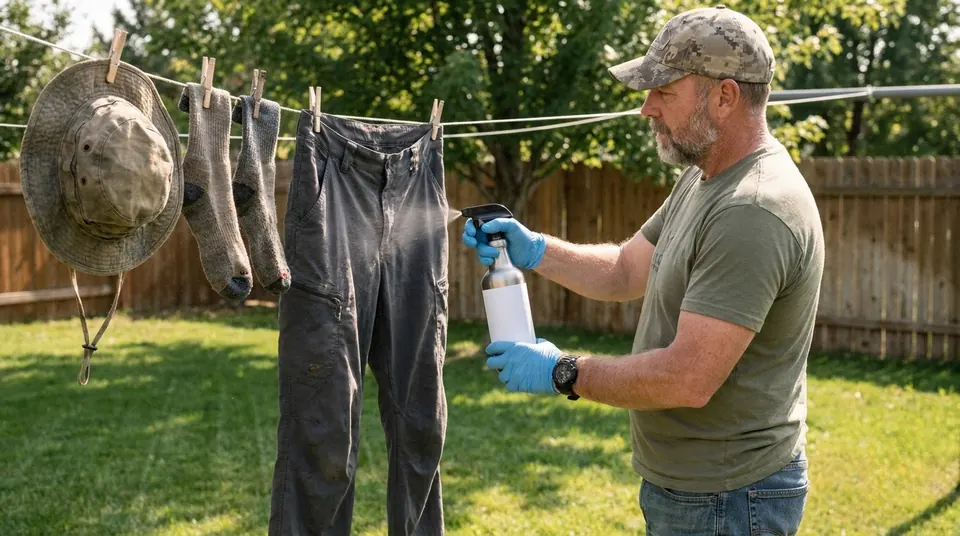
How to Prevent Trench Foot: Wool Socks, Dry Feet, Daily Change
How to prevent trench foot: what causes it, early symptoms, the daily sock routine soldiers use, wool vs cotton, and what to do for wet feet at home.
 By Mike Dawson
8 min read
BLUFBottom line up front
Prevent trench foot by keeping your feet dry. Wear wool, not cotton. Change socks every day, dry the wet pair inside your shirt, air your feet at night, and keep boots loose enough for blood flow. It can happen in cool, above-freezing weather after long wet exposure.
- Trench foot (immersion foot) comes from feet staying wet for a long time, even above freezing.
- Early signs: numb, tingling, pale or blotchy, swollen, heavy feet. See a doctor if you suspect it.
- Wool keeps insulating when damp. Cotton holds water against the skin.
- Change socks daily and dry the wet pair with body heat. Air your feet and keep them clean.
- Flood clean-up, hunting and outage chores in wet boots are the home risks.
Draw list What to get, and why
| Item | Why | Rough cost |
|---|---|---|
| Wool boot socks, 4 or more pairs | Insulate when damp, cushion the heel | A few dollars to about $15 a pair |
| Foot powder | Helps keep skin dry between changes | A few dollars |
| Waterproof boots, a size with room | Keeps water out without squeezing blood flow | About $60-150 |
| Rubber boots for flood clean-up | Waterproof for standing water | About $25-50 |
| Spare dry insoles | Wet insoles stay wet for days | About $10-20 |
| Moleskin or blister pads | Protect hot spots before they open | A few dollars |
Rather watch it?
I cover this in a video: 11 Things Veterans Buy at an Army Surplus Store That Civilians Ignore.
Plays from YouTube when you click it.
This is information, not medical care. If you think someone has trench foot, get medical attention right away.
Trench foot is what happens when feet stay wet for too long. How to prevent trench foot is simple: keep them dry, keep them warm enough, and keep blood moving. The hard part is doing it for days in bad weather with no dryer and no heat.
You don’t need a war to get it. Wet boots during flood clean-up, a long hunt in cold rain, or a week of outage chores in damp boots can do it. Soldiers learned this the hard way, and the habits they were taught still work.
What trench foot is and how it develops
Trench foot, also called immersion foot, is a cold injury to the feet. CDC says trench foot occurs when feet are wet for long periods of time. It is a non-freezing injury, so it can happen above freezing.
Wet skin loses heat much faster than dry skin. The body narrows blood vessels in the feet to save heat. That cuts off oxygen and nutrients, and the tissue starts to suffer. A cold, wet boot is the perfect setup.
How cold and how long? An OSHA training handout notes it can occur at temperatures as high as 60°F (about 15°C) if feet are constantly wet. Other medical sources describe exposure over many hours to days. Treat the exact hours as a rule of thumb, not a safe limit. Colder and wetter is worse.
Trench foot symptoms
Early symptoms:
- numbness or tingling;
- skin that looks pale, blotchy or waxy;
- swelling and a heavy feeling;
- pain that feels like a burn.
CDC lists hurting, swelling and a heavy feeling. As it gets worse the foot may turn red and become very painful as it warms. Blisters, open sores and skin that turns dark or blue-gray are danger signs. Medical sources report that severe cases can lead to tissue death.
Safety: Treat these as an emergency: blisters or open skin, black or gray patches, a foul smell, fever, spreading redness, or a foot that stays numb. Get medical care. CDC says to seek attention right away if you suspect trench foot.
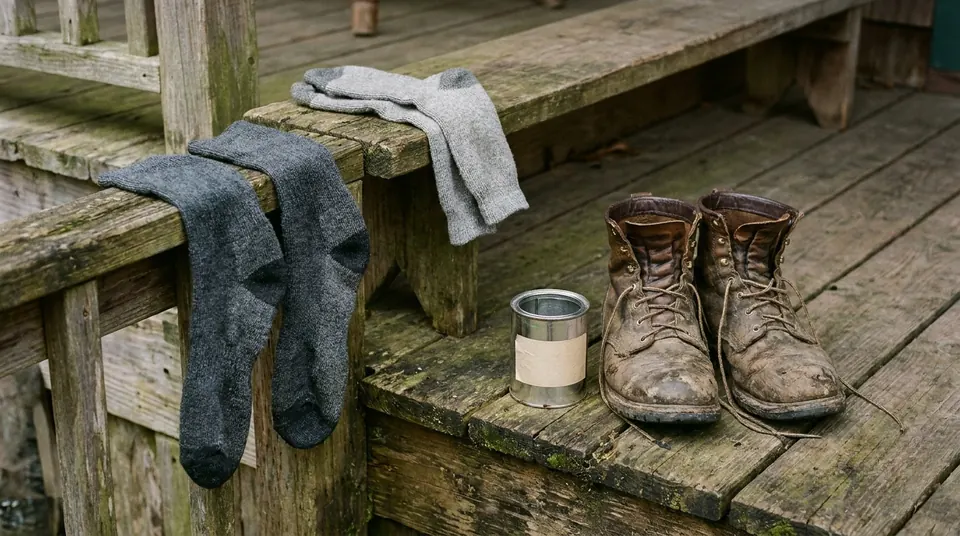
First aid for wet, numb feet
These are general steps. They don’t replace a doctor.
- Get out of the wet. Take off boots and socks.
- Wash gently if dirty, then dry the feet well.
- Put on clean, dry socks.
- Keep the feet raised and don’t walk on them more than you must.
- Soak in warm water for about 5 minutes if you do. CDC’s page says warm water, and an archived CDC fact sheet gave a range of 102 to 110°F (39 to 43°C). Numb feet burn easily, so test the water with your hand or elbow first.
- Don’t rub the feet, and don’t use a heating pad or hot water bottle.
- See a doctor.
Skip the folk cures. Rubbing damaged skin and strong heat make it worse.
How to prevent trench foot
Wear wool, not cotton
Wool keeps insulating when it is damp. Cotton soaks up sweat and holds it against your skin. A wet cotton sock in a cold boot is a cold compress you wear all day. Cotton also blisters heels faster.
Military-style boot socks are thick and mostly wool, with a cushioned sole. You can find them at army surplus stores and farm stores. Buy more pairs than you think you need. Heels wear out first.
How to read a sock label
Fibers are listed biggest share first. You want wool at the front of the line, then nylon or similar for strength. Avoid labels that start with cotton. Surplus bins often mix in cotton and thin dress socks, so check each pair.
Look for a thick cushion under the heel and ball of the foot. That padding matters on long walks, which is most of what you do when the car won’t go.
Change socks every day
This is the soldier’s rule. Change daily, even when you are tired and cold and the last thing you want is to take your boots off. It costs nothing and beats any fancy boot.
If you can, change more often when your socks get soaked, not on a schedule alone.
Dry the wet pair inside your shirt
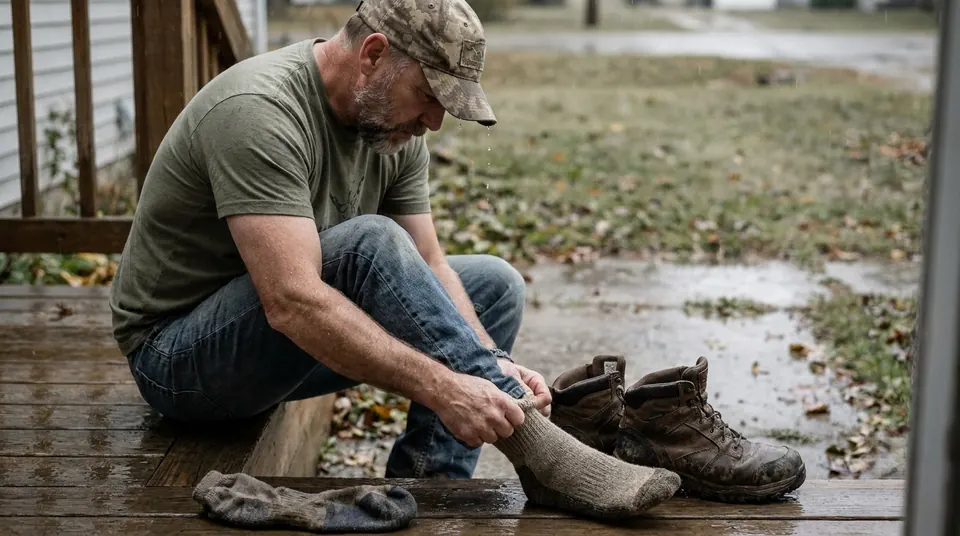
There is no dryer when the grid is down. The only dryer left is your own body. Tuck the wet pair flat inside your shirt, against your belly or back. Body heat dries it while you work or sleep.
Soldiers get sentimental about very few things, and dry socks rank somewhere above their sergeant. Never put wet socks back on when a dry pair is in your bag.
Other ways to dry socks in the field:
- Hang them near a stove or fire, at a safe distance, and watch them. Scorched wool is wasted.
- Stuff boots with dry paper or cloth overnight to pull out water.
- Take insoles out so they dry too.
- Never dry boots on a hot heater. It can crack leather and glue.
Foot powder, clean feet, air at night
Wash your feet when you can, dry between the toes, and use foot powder if it helps you stay dry. Take boots and socks off at night. Let your feet air, and raise them off the ground when you sleep. CDC says to raise bare feet when sleeping. Don’t sleep in socks you walked in.
Boots that fit, not too tight
Tight boots cut off blood flow and speed up cold injury. You want room for a thick sock and for toes to move. Try boots on with the socks you will actually wear. In winter, buy half a size up, but not so big that your heel slides.
Insulated, waterproof boots keep water out. If water gets in over the top, they hold it in. That is why a dry spare pair of socks matters more than the boot.
A simple daily routine for a wet week
Put it on a card by the door if you have to. Routines beat memory when you are tired.
Morning
- Put on the dry pair you dried overnight.
- Check boots for water or grit inside. Shake them out.
- Pad any hot spot before you start walking.
During the day
- When your feet get soaked, stop and change if you can. Don’t wait for evening.
- Keep one spare pair in a plastic bag so it stays dry in your pack or coat.
- Loosen laces a little if your toes go numb. Tight laces cut blood flow.
- Stand and move. Sitting still in wet boots lets feet chill.
Evening
- Take boots off. Look at your feet: color, swelling, blisters.
- Wash and dry them, including between the toes.
- Dry the wet socks inside your shirt, and put the insoles somewhere dry.
- Raise your feet while you rest.
Check your family’s feet too, especially kids and older relatives. Numb feet don’t complain, so you have to look. If you see pale, swollen or blotchy skin and the foot feels numb or heavy, treat it as the early stage and dry it out right away.
Blisters and why they matter grid-down
A blister you’d ignore in a normal week can get infected when you can’t keep it clean and there is no clinic. An infected foot takes you out of the game as surely as trench foot. See how to clean a wound for steps.
Prevention is easy:
- Stop at the first hot spot and pad it with moleskin or tape.
- Keep socks clean and dry.
- Break in boots before you need them.
- Trim toenails.
Don’t pop a blister unless you must. Intact skin is the best cover.
Who is at risk at home
- Flood clean-up. Standing water and wet mud for hours. Wear rubber boots, and change into dry shoes during breaks.
- Hunters. Long hours in cold, wet boots. Pack spare socks.
- Outage chores. Hauling water or wood in damp boots, then sitting in a cold house.
- Anyone with poor circulation, such as people with diabetes, who should be careful and talk to their doctor.
Bugs are the other thing that follows wet ground. See how to treat clothes with permethrin.
Army lesson: In the European winter of 1944-45, the Army counted roughly 71,000 cold injuries, most of them trench foot and frostbite. Many men spent days in wet foxholes in boots that never dried. The Army’s own history later called those losses avoidable. Dry socks and a daily change were part of the fix.
Frequently asked questions
Can you get trench foot in warm weather?
Yes, if feet stay wet for a long time. It is linked to cool temperatures, and sources say it can happen up to about 60°F. In hot weather, long wet exposure causes other skin problems like fungus and breakdown.
What are the first signs of trench foot?
Tingling, numbness, pale or blotchy skin, swelling and a heavy feeling in the feet. Take off wet footwear, dry the feet, and get medical advice. Don’t wait for blisters.
How long does it take to get trench foot?
Sources describe many hours to days of constant wet and cold. There is no exact safe time. Treat any day of soggy boots as a warning and dry your feet.
Are wool socks really better than cotton?
Yes for wet, cold work. Wool keeps some insulation when damp, and cotton holds water against skin. Look for a label with wool listed first and a thick sole.
How do I dry wet socks without power?
Tuck them inside your shirt against your body, and wear them dry the next morning. You can also hang them near a safe heat source and stuff boots with dry paper.
What to do this weekend
- Count your wool socks. Aim for at least 4 pairs per person.
- Throw out cotton socks from your outdoor drawer.
- Check boot fit with a thick sock on.
- Buy foot powder and moleskin.
- Put rubber boots and spare socks in the car and by the door.
Sources
General information, not medical or professional advice. In an emergency, call 911 and follow official instructions. Disclaimer.