How to Treat Clothes with Permethrin: Steps, Safety and Cats
How to treat clothes with permethrin for ticks and mosquitoes: step-by-step spraying, drying time, how long it lasts, what never to spray, and cat safety.
 By Mike Dawson
8 min read
BLUFBottom line up front
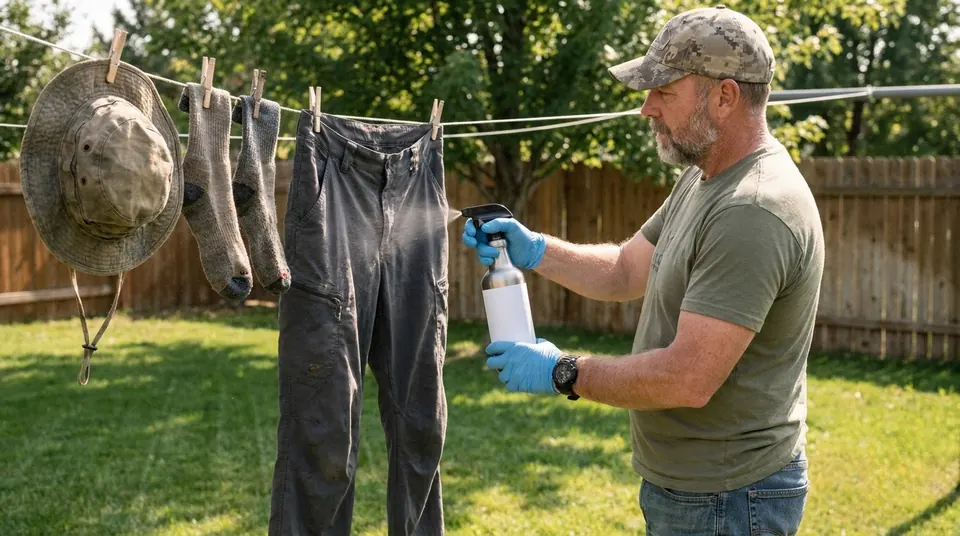
Spray 0.5% permethrin on clothes outdoors, soak the fabric evenly, and let it dry completely, usually 2-4 hours, before wearing. Treat cuffs, socks, boots and hats. Never spray skin. Use DEET, picaridin or IR3535 on skin. Keep cats away until it is dry.
- Permethrin goes on clothing and gear only, never on skin. Skin gets an EPA-registered repellent.
- Spray outdoors, wear gloves, and dry fully before wearing. Label drying time is often 2-4 hours.
- Durability depends on the product. Consumer sprays often claim about 6 washes or weeks. Check your label.
- Wet permethrin is dangerous for cats. Keep them away until the clothes are dry.
- Factory-treated clothing carries a tag. Check it when you buy surplus.
Draw list What to get, and why
| Item | Why | Rough cost |
|---|---|---|
| 0.5% permethrin clothing spray | Treats clothes and gear against ticks and mosquitoes | About $10-20 a can |
| Disposable gloves | Keep the spray off your hands | A few dollars |
| Clothesline or hangers outdoors | Dry fully before wearing | A few dollars |
| Skin repellent (DEET, picaridin or IR3535) | Covers skin that clothes don’t | About $5-12 |
| Tick key or fine tweezers | Remove ticks you find | A few dollars |
| Factory-treated clothing (optional) | Even treatment, longer lasting | Varies; roughly $30-80 a garment |
Rather watch it?
I cover this in a video: 11 Things Veterans Buy at an Army Surplus Store That Civilians Ignore.
Plays from YouTube when you click it.
Ticks and mosquitoes make people sick, and an outage makes them worse. If you want to know how to treat clothes with permethrin, the short version is: spray the clothes, never the skin, and let them dry completely.
Treated clothing is one half of what the military calls a repellent system. The other half is a skin repellent. Used together, they cover what each one misses. This guide covers the steps, how long it lasts, which items to treat, and the cat warning that many people miss.
This is general safety information. Always follow the label on your product. The label is the law for pesticides.
What permethrin does
Permethrin is an insecticide. It soaks into fabric. Ticks and mosquitoes that land on treated cloth are knocked down or killed, and a tick that crawls on usually drops off before it bites. CDC advises treating boots, clothing and camping gear with 0.5% permethrin, which stays protective through several washings.
It does not protect skin that isn’t covered. EPA notes that only the skin covered by treated clothing is protected, so you still need a skin repellent for the rest.
Why bug pressure rises after a collapse
Much of your protection is invisible today. Somebody sprays for mosquitoes. Somebody keeps storm drains clear. When that stops and gutters fill with standing water, mosquitoes come back fast, and so can West Nile virus.
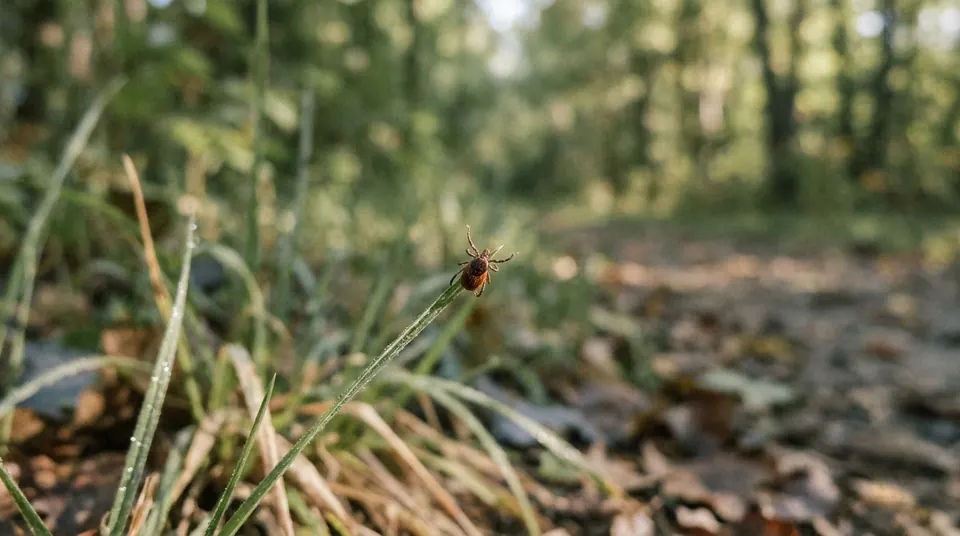
Ticks don’t care what’s on the news. They wait in tall grass, and you will be walking through it to haul water and gather wood. A tick bite you never noticed can turn into Lyme disease, with weeks of fever and aching joints and no easy doctor visit. See CDC’s tick prevention page for more.
How to treat clothes with permethrin, step by step
Use a product made for clothing, with 0.5% permethrin. Read the label first. These are the common steps. If your label says something different, follow the label.
- Go outdoors. Pick a spot with good airflow, away from kids, pets, food and open water.
- Cover your hands. Wear disposable gloves.
- Lay out or hang the clothes. Keep them off the grass where pets walk.
- Spray evenly. Hold the can the distance the label says, and spray until the fabric is damp, not dripping. Do both sides if the label says so.
- Treat the high-risk spots well. Cuffs, seams, socks and boot fabric.
- Let it dry completely. Many labels say at least 2 hours, and 4 hours if humid. A sunny line is best.
- Wear it only when dry. Don’t put treated clothes on damp.
- Wash your hands after you handle the treated items.
Don’t spray indoors. Don’t spray clothing while you are wearing it.
Tip: Treat the clothes the day before you need them. Then you aren’t rushing the drying time.
What to treat
Treat the things that brush against brush:
- pant cuffs and lower legs;
- socks;
- boots, where the label allows it;
- hats;
- sleeves and shirt hems, if you walk through tall grass;
- camp gear like packs, though read the label.
Skip underwear and anything that touches the body closely for long periods, unless the product says it is safe. EPA says not to apply permethrin sprays to certain clothing such as underwear. Check the label for other items it excludes.
How long does permethrin last on clothes?
It depends on the product. Don’t guess.
| Type | How long it lasts | Notes |
|---|---|---|
| Consumer spray, 0.5% | Often claimed at about 6 weeks or 6 washes by makers; some labels claim less | Rule of thumb. Check your can. |
| Soak or kit for home use | Longer, per label | Some Army field kits claim up to 50 washes |
| Factory-treated clothing | Often claimed to last the life of the garment, up to about 50 washes for Army uniforms | Check the tag |
Army material says its treated uniforms are expected to last about 50 launderings. The Army’s public health center also says dry cleaning removes permethrin. Don’t dry-clean treated items. Wash them apart from untreated clothes, because small amounts of permethrin can come off in the wash, as EPA notes.
I could not find one official figure for how many washes a home spray survives, so treat the 6-wash number as a rule of thumb, and re-treat on the schedule the label gives.
Never on skin: permethrin vs DEET
Permethrin is for fabric. It never goes on skin. For skin, use an EPA-registered repellent. CDC lists DEET, picaridin, IR3535, oil of lemon eucalyptus, para-menthane-diol or 2-undecanone. Don’t use products with oil of lemon eucalyptus or PMD on children under 3.
| Permethrin | DEET, picaridin, IR3535 | |
|---|---|---|
| Goes on | Clothes and gear | Skin and clothes (follow label) |
| How it works | Kills or knocks down on contact | Repels, so bugs avoid you |
| Lasts | Weeks to many washes | Hours, then reapply |
| On skin? | Never | Yes, as labeled |
Treated clothes and a skin repellent together are better than either alone.
The military system
The DoD Insect Repellent System has several parts: a permethrin-treated uniform, a repellent for exposed skin, and sleeping under a bed net where needed. The Army’s public health center describes the DoD Insect Repellent System as these layers working together.
The Army began selling permethrin-treated uniforms in its clothing stores in October 2012. EPA reviewed the safety of factory-treated clothing and found that wearing it is unlikely to pose significant hazards, including for toddlers and for personnel who wear it daily.
At a surplus store, check the tag. Not every uniform on the rack was treated, and an untreated one is just a shirt. More on what to look for in my army surplus buying guide.
Cats and permethrin
Safety: Permethrin is highly toxic to cats while wet. Keep cats away from the spray area, the can and the wet clothes until everything is completely dry. Many permethrin labels carry a “do not use on cats” warning. If a cat is exposed, call your vet or a poison hotline right away.
Cats can’t break the compound down the way other animals can. The risk is highest from wet product and from dog flea products that contain permethrin. Some veterinary sources say fully dried treated clothing is a low risk, but the safe rule is simple: spray where cats can’t go, dry the clothes out of reach, and don’t let a cat rub on wet gear.
The National Pesticide Information Center has a permethrin fact sheet and a hotline at 1-800-858-7378.
Tick checks still matter
Treated clothing lowers your risk, not to zero. After walking in brush:
- check your body, including scalp, behind knees and waistline;
- shower soon after coming in if you can;
- put clothes in a hot dryer if you have power, which kills ticks;
- remove a tick with fine tweezers, pulling straight out.
If you get a fever or a rash after a tick bite, see a doctor. Clean the bite spot with soap and water, and for scratched or broken skin see how to clean a wound.
Do it yourself or buy treated clothes?
Both work. Pick by what you will actually do.
Home spray
- Cheap and flexible. You can treat the clothes you already own, plus boots, hats and packs.
- Coverage depends on you. Patchy spraying means patchy protection.
- Needs re-treating, and the label sets the schedule.
Factory-treated clothing
- Even coverage, applied in a controlled process.
- Lasts longer, and the tag tells you how many washes it is rated for.
- Costs more, and you can’t treat what the factory didn’t.
A mix is common. Buy a few factory-treated shirts and trousers for daily work, and spray socks, hats and boots at home.
One more caution from the Army side: its flame-resistant uniforms can’t be treated by the user, because the fabric absorbs the spray unevenly. If a garment is flame-resistant, don’t spray it yourself.
Storing and handling permethrin
- Keep the can in its original container, upright, away from food, feed and pet supplies.
- Store it where kids and cats can’t reach it.
- Don’t pour leftover liquid down a drain or onto the ground near water. Follow the label for disposal, because permethrin is also toxic to fish and bees.
- Wash treated clothes apart from other laundry, as the label directs.
- Keep a written note of the treatment date on the garment’s tag or inside the cuff with a marker. It saves guessing months later.
Permethrin is not a substitute for common sense. Long sleeves, tucked pant legs, light colors that show ticks, and staying on cleared paths still help.
Army lesson: In the Pacific in World War II, malaria produced huge numbers of casualties. Military planners estimated it took at least 3, possibly as many as 5, divisions to keep one division in contact with the enemy, because of malaria losses. (You will see a famous quote about this credited to General MacArthur. I could not trace it to a primary source, so I don’t quote it.) Source: Military Health System.
Frequently asked questions
How long does permethrin last on clothes?
For home sprays, makers often claim about 6 washes or 6 weeks, but the label for your product rules. Factory-treated military uniforms are expected to last about 50 launderings. Dry cleaning removes it.
Is permethrin safe for cats?
Not while wet. Wet permethrin is highly toxic to cats. Keep cats away until clothes are completely dry, and call a vet right away if a cat is exposed. Never put permethrin on a cat.
Can you spray permethrin on skin?
No. Permethrin is for clothing and gear only. For skin, use an EPA-registered repellent such as DEET, picaridin or IR3535, and follow the label.
How long does permethrin take to dry?
Many labels say at least 2 hours, or 4 hours when it is humid. Hang the clothes outdoors, out of reach of pets and kids, and don’t wear them until dry.
What is better, permethrin or DEET?
They do different jobs. Permethrin treats clothes and kills ticks and mosquitoes on contact. DEET goes on skin and repels. Use both for the best protection.
What to do this weekend
- Buy 0.5% permethrin clothing spray and read the label.
- Spray work clothes outdoors, with cats and kids inside.
- Dry them for the full time on the label.
- Buy a skin repellent with DEET, picaridin or IR3535.
- Put a tick key in your kit.
- Pair this with dry feet: see how to prevent trench foot.
Sources
General information, not medical or professional advice. In an emergency, call 911 and follow official instructions. Disclaimer.